

7 Best Low Retention Grinders for Home Espresso
Table of Contents
- What Is Grind Retention and Why Low Retention Matters for Espresso
- How to Reduce Grind Retention in Your Espresso Workflow
- Single Dose Espresso Grinder: The Best Approach to Zero Retention
- 1. Mazzer Philos: Premium Single-Dose Performance
- 2. Baratza Vario W+: Compact Precision with Weight-Based Dosing
- 3. Mazzer Super Jolly V Up: Commercial Reliability for Home Use
- 4. Baratza Forté BG: Brew-Focused Flat Burr Grinder
- 5. Mazzer Super Jolly V Pro: Advanced Workflow Features
Last Updated: August 15, 2026
What Is Grind Retention and Why Low Retention Matters for Espresso
Grind retention is the amount of ground coffee that remains trapped inside your grinder after each use. Residual grounds cling to the burrs, chute, and internal pathways, where they oxidise and stale, eventually contaminating your fresh espresso with flat, bitter notes that undermine extraction clarity.
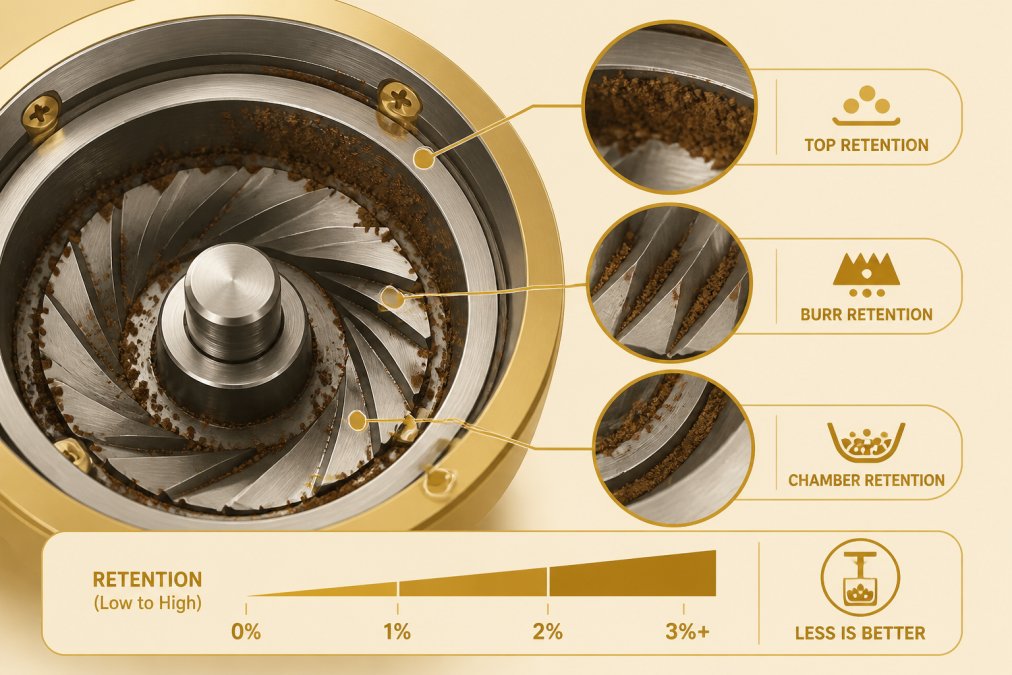
Low retention grinders minimise this problem through optimised chute geometry, declumping mechanisms, and gravity-assisted grind paths, ensuring nearly all ground coffee exits immediately. For home espresso enthusiasts, this means you can switch between different coffee beans without flavour bleed-through. Espresso pulled through a low-retention grinder shows cleaner acidity, brighter florals, and more refined body than the same beans ground in a high-retention machine.
Low retention also means less waste. A traditional hopper-fed grinder might lose 2-3 grams of coffee to retention per dose. Over a week of daily espresso, that's 14-21 grams of wasted premium coffee. With a low-retention grinder, you're grinding what you use.
How to Reduce Grind Retention in Your Espresso Workflow
If you're working with an existing machine, several workflow adjustments can meaningfully lower the amount of old grounds contaminating your next shot.
Declump and tap. After grinding, gently tap the side of the grinder or use a small brush to dislodge grounds stuck to the burrs and chute. Many home baristas spend 10-15 seconds per dose doing this and see measurable improvement in flavour consistency.
Purge between beans. Run the grinder empty for 3-5 seconds before grinding your new coffee. This pushes out residual grounds from the previous dose. You'll lose a small amount of fresh coffee, but the payoff is no cross-contamination.
Adjust your grind path. Finer grinds tend to stick more because of increased surface area and static electricity. Try grinding slightly coarser and adjusting your espresso dose or tamp to compensate.
Use bellows or compressed air. Some grinders include a bellows mechanism that helps dislodge grounds. If yours doesn't, you can gently blow air into the chute after grinding.
Reduce static. Grind into a slightly damp portafilter or use a grinder with anti-static features to minimise clinging.
The reality: workflow adjustments help, but they're band-aids. If low retention is your priority, a purpose-built low-retention grinder is the real solution.
Single Dose Espresso Grinder: The Best Approach to Zero Retention
Single-dose grinders represent the gold standard for retention control. You load exactly the amount you need for one shot, typically 18-20 grams for espresso. The coffee goes in, grinds immediately, and exits completely before you load the next dose.
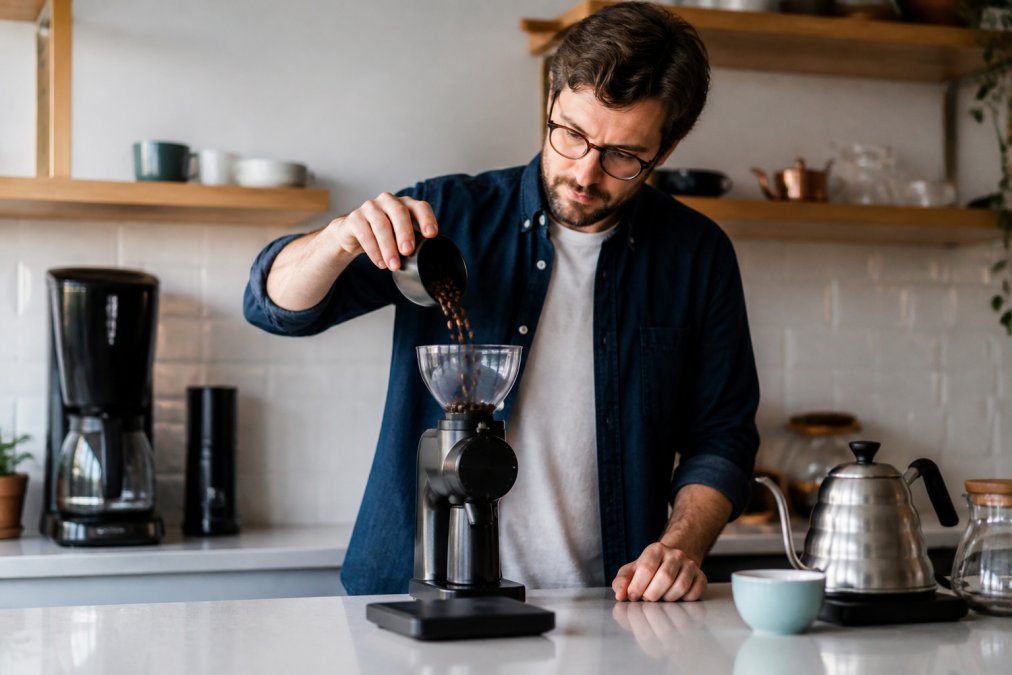
If nothing sits in the grinder between shots, nothing can stale or contaminate. You're starting fresh every time. This is why single-dose grinders have become the default choice for specialty coffee professionals and serious home enthusiasts.
The tradeoff is workflow speed. Loading, grinding, and unloading takes 45-60 seconds per shot versus 15-20 seconds with a traditional hopper-fed machine. For someone pulling one or two espressos daily, that's negligible. Single-dose grinders also tend to cost more because they require precise engineering to eliminate retention completely, but the results justify the investment for serious espresso enthusiasts.
1. Mazzer Philos: Premium Single-Dose Performance
The Mazzer Philos stands as a refined single-dose grinder for home espresso. Its 64mm flat burrs deliver exceptional particle consistency, and the compact design maintains Mazzer's commercial standards in a footprint that fits any home setup.

The Philos offers flexibility with two burr set options (I189D for espresso focus or I200D for filter clarity), both available with stepped or stepless adjustment. This means you're not locked into one brewing style; you can dial in espresso in the morning and switch to pour-over without recalibrating.
Retention is genuinely minimal. The grind path is engineered to release grounds completely, and most users report zero grounds remaining after each dose. The 400W motor grinds 18-20 grams of espresso-fine coffee in roughly 15-20 seconds without generating excessive heat. The anodised aluminium body feels premium and resists wear over years of use.
Best for: Serious home baristas who value precision, consistency, and low retention above all else. The compact footprint makes it ideal for smaller kitchens.
What works: Exceptional grind consistency, genuine single-dose retention control, flexible burr options, premium build quality.
Where it falls short: The price is steep for casual users. The small hopper means you'll load fresh beans for every shot, which some find tedious rather than beneficial.
2. Baratza Vario W+: Compact Precision with Weight-Based Dosing
The Baratza Vario W+ uses weight-based precision to deliver repeatable doses with minimal fuss. You set your target weight (accurate to 0.1 grams), hit start, and the grinder stops automatically when it reaches that weight.
This approach trades some retention control for convenience. The Vario W+ isn't a true single-dose grinder with its 300g hopper, but its low-retention design and weight-based system mean you're grinding only what you need, consistently.
The 54mm flat burrs produce excellent clarity for filter coffee and respectable espresso shots. The grind range is broad (230 to 1150 microns), so you can move between brewing methods without major adjustments. Three programmable presets let you save your favourite weights for espresso, pour-over, and French press, then recall them instantly.
The touchscreen interface and LED lights show you what's happening in real time. The build quality is solid, powder-coated metal and ABS plastic that feels durable. Grinding 18 grams for espresso takes roughly 15-20 seconds depending on bean density.
Best for: Home baristas who want precision and repeatability without the ritual of manual single-dosing. Ideal if you're switching between espresso and filter coffee regularly.
What works: Weight-based dosing is genuinely convenient, build quality is solid, three programmable presets save time.
Where it falls short: Retention is lower than a true single-dose machine, but not zero. If absolute freshness is your priority, this compromises slightly on that front.
3. Mazzer Super Jolly V Up: Commercial Reliability for Home Use
The Mazzer Super Jolly V Up is a commercial grinder scaled down for home and small-office use. With its 1.1kg hopper, it's not a single-dose machine, but its engineering and retention control rival machines costing significantly more.

The 64mm flat burrs are the same precision components Mazzer installs in busy cafés. The stepless micrometric adjustment gives you infinite grind control, and the Grind Flow Control (GFC) system actively reduces clumping and static. This combination means your grind consistency is exceptional and your workflow is low-friction.
The Electronic model adds programmable dosing, which is genuinely useful for repeatability. You set three dose times, and the grinder stops automatically. It's not weight-based like the Vario W+, but it's faster and more intuitive for espresso.
The die-cast aluminium construction is strong enough for daily commercial use, so it will easily handle home duty.
Best for: Home baristas who want commercial-grade reliability and consistency without single-dose discipline. Also suitable for small offices where multiple people will be pulling espresso throughout the day.
What works: Commercial-grade engineering, programmable dosing on Electronic model, excellent grind consistency, built to last for years.
Where it falls short: Larger hopper means retention is higher than single-dose machines. If you're switching between very different coffees, you'll want to purge the grinder between beans.
4. Baratza Forté BG: Brew-Focused Flat Burr Grinder
The Baratza Forté BG is explicitly designed for filter coffee and brewed methods, but it's capable enough for espresso if that's your secondary brewing style. The 54mm flat burrs are engineered to reduce fines, which produces exceptional clarity in the cup.

What's unusual about the Forté BG is its focus on consistency over speed. It grinds at 1.3-2.7 grams per second depending on grind setting, which is deliberate. Slower grinding generates less heat and produces more uniform particle distribution.
The touchscreen interface includes dose-by-weight accuracy (to 0.1 grams) and three programmable presets. The macro and micro adjustment system is all-metal and feels precise. You can recalibrate the burrs using the included tool, which is useful if you want to shift the grind range for specific brewing methods.
Best for: Filter coffee enthusiasts who want exceptional clarity and consistency. Works well if espresso is secondary to your brewing routine.
What works: Outstanding particle distribution for filter coffee, weight-based dosing, durable all-metal construction.
Where it falls short: Slower grinding speed means it's not ideal if you're pulling multiple espresso shots in quick succession. The burr geometry favours filter coffee; espresso shots are good but not exceptional.
5. Mazzer Super Jolly V Pro: Advanced Workflow Features
The Mazzer Super Jolly V Pro steps up from the V Up by adding advanced features aimed at busy environments. The same 64mm flat burrs and stepless adjustment are there, but the V Pro includes a double fan cooling system and optional IoT connectivity for remote monitoring.
The cooling system matters if you're grinding continuously. The advanced fans help maintain optimal operating temperatures, which preserves grind quality during extended use. For a home barista pulling 3-5 espressos daily, this is less critical than for a café, but it's a genuine advantage during busy mornings.
The programmable electronic dosing is intuitive. Three preset dose times mean you can optimise for different basket sizes or brewing preferences without manual adjustment. The GFC system reduces clumping and static, so your workflow is clean and efficient.
Best for: Home baristas who grind frequently and want advanced features without jumping to full commercial machines. Also suitable for small offices with consistent espresso demand.
What works: Double fan cooling preserves grind quality during extended use, programmable dosing, same excellent burr quality as the V Up.
Where it falls short: The cooling system and advanced features add cost that most home users won't fully utilise. If you're pulling 2-3 espressos daily, the V Up is sufficient.
| Grinder | Burr Type | Burr Size | Retention | Best For |
|---|---|---|---|---|
| Mazzer Philos | Flat | 64mm | Minimal (true single-dose) | Premium single-dose priority |
| Baratza Vario W+ | Flat | 54mm | Low (weight-based dosing) | Home espresso + filter coffee |
| Mazzer Super Jolly V Up | Flat | 64mm | Moderate (1.1kg hopper) | Commercial reliability at home |
| Baratza Forté BG | Flat | 54mm | Moderate (300g hopper) | Filter coffee focus |
| Mazzer Super Jolly V Pro | Flat | 64mm | Moderate (1.1kg hopper) | Advanced features, frequent use |
Choosing Your Low Retention Grinder
The right grinder depends on your brewing frequency, space constraints, and priorities. If retention is your obsession, the Mazzer Philos Coffee Grinder delivers the lowest retention possible. If you want precision without single-dose discipline, the Baratza Vario W+ Coffee Grinder offers weight-based repeatability.
For home baristas balancing performance and practicality, the Mazzer Super Jolly V Up Coffee Grinder represents a strong option. You get commercial-grade engineering, and programmable dosing. It's a machine designed for consistent daily use.
The Baratza Forté BG Coffee Grinder is the choice if filter coffee dominates your routine. Espresso is secondary, and you want the cleanest possible brews.
All five grinders share one characteristic: they're built to last. These machines are designed to perform consistently for a decade or more. That longevity justifies the investment when you calculate cost per espresso over time.
Choosing a low retention grinder is an investment in consistency and flavour clarity. The machines featured here represent excellent options for home espresso, each optimised for different workflows and priorities. At Coffee Craft Studio, we stock these grinders because they genuinely solve the retention problem, whether through single-dose design, weight-based precision, or commercial-grade engineering. Start with the grinder that matches your brewing habits, and you'll immediately notice the difference in your espresso.
Frequently Asked Questions
Why is low grind retention important for espresso?
Grind retention, leftover coffee grounds stuck inside your grinder, degrades flavour quality. Old grounds mix with fresh coffee, creating stale, bitter notes and masking the delicate characteristics of your beans. Low retention grinders ensure each shot contains only freshly ground coffee, delivering the clarity and complexity espresso demands. This is especially critical when switching between different coffee origins.
What is the difference between a single dose espresso grinder and a standard hopper-fed grinder?
Single-dose grinders minimise retention by grinding only the exact amount of beans needed per shot, typically 18-20 grams. Standard hopper-fed grinders store beans continuously, allowing older grounds to accumulate in the burr chamber and chute. Single-dose models require manual bean loading but deliver superior freshness and the ability to switch coffees without residual flavour carryover, making them ideal for espresso enthusiasts who value consistency.
How do I measure grind retention in my coffee grinder?
Weigh your grinder before and after grinding a known amount of beans. The difference between input weight and output weight is your retention. For example, if you load 20 grams of beans and only 19 grams of ground coffee exits, you've retained 1 gram. Most quality espresso grinders retain between 0.5-2 grams. Single-dose and low-retention designs typically stay below 1 gram, preserving freshness across multiple shots.
Do I need a bellows attachment to achieve zero retention?
Bellows help but aren't essential. They push residual grounds from the burr chamber and chute, reducing retention by 0.2-0.5 grams. However, well-designed grinders with optimised chute geometry and anti-static features achieve low retention naturally. Single-dose grinders and models with Grind Flow Control systems minimise static and clumping without additional tools, though bellows remain useful for thorough cleaning between coffee changes.
What burr size and geometry produce the best grind consistency for espresso extraction?
Flat burrs (64-83mm) deliver exceptional particle uniformity and clarity, ideal for highlighting single-origin espresso characteristics. Conical burrs (63mm) produce slightly richer body and sweetness, suiting darker roasts. Larger burrs (83mm) generate less heat and handle higher volumes. For home espresso, 64mm flat burrs offer the best balance of consistency, heat control, and flavour clarity. Burr material, stainless steel or special steel, also affects particle distribution and fines production.
This article was written using GrandRanker