

Best Espresso Machine for Lattes at Home in 2026?
Last Updated: October 24, 2026
Quick Summary
The best espresso machine for lattes at home is the Sage The Oracle Dual Boiler, which pairs dual stainless steel boilers with automatic milk texturing so you can brew and steam simultaneously. It costs £2,249.96 and suits households making two or more milk drinks daily.
- A latte is roughly one part espresso to three or four parts textured milk, so milk quality matters most.
- The Oracle Touch automates grind, brew and milk across a touchscreen and stores up to 8 customised drinks.
- The Bambino measures 19.5cm wide and heats to extraction temperature in as little as 3 seconds.
- Aerate milk for just two or three seconds, then submerge the tip to build a rolling whirlpool.
- Budget £150-£250 per year in consumables on top of your machine purchase.
Table of Contents
- What Actually Matters in an Espresso Machine for Lattes
- The Best Espresso Machine with Milk Frother: Our Top Picks
- The Best Automatic Coffee Machine for Lattes
- The Best Compact Espresso Machine for Small Kitchens
- How to Steam Milk for a Latte at Home
- Total Cost of Ownership: What a Latte Habit Really Costs
- Choosing Your Espresso Machine at Coffee Craft Studio
- Frequently Asked Questions
What Actually Matters in an Espresso Machine for Lattes
The best espresso machine for lattes at home is the one that steams milk well, not simply the one that pulls a good shot. A latte is roughly one part espresso to three or four parts textured milk, so most of what you taste is milk. If the steam wand is weak or inconsistent, the drink fails no matter how good the coffee is.
Milk performance: steam power and microfoam. Microfoam is milk aerated and heated into a glossy, pourable texture with bubbles too small to see. Good microfoam sits in the jug like wet paint and folds into the espresso without collapsing. A dedicated steam boiler gives you dry, powerful steam that stretches milk quickly, which is what makes consistent microfoam repeatable rather than lucky.
Workflow, boiler design and countertop footprint. Dual boiler machines let you brew and steam at the same time. Single boiler machines force you to wait between steps. For one latte a day that wait is tolerable; for three in a row it becomes the reason the machine ends up in a cupboard. Measure your counter before you fall in love with a spec sheet.
For a deeper look at milk texture options, our comparison of cold foam vs steamed milk for coffee covers when each one suits a drink.
The Best Espresso Machine with Milk Frother: Our Top Picks
Our top pick for milk-first brewing is the Sage The Oracle Dual Boiler Espresso Machine Stainless Steel, which pairs a dual stainless steel boiler system with automatic milk texturing. It allows simultaneous espresso extraction and milk steaming, and the Auto MilQ steam wand textures milk automatically with adjustable temperature and texture levels. The 58mm portafilter takes a 22g dose, and the built-in Baratza grinder offers 45 grind settings with automatic dosing and tamping.

At £2,249.96 it is a serious outlay.
| Machine | Price | Milk system | Best for |
|---|---|---|---|
| Oracle Dual Boiler | £2,249.96 | Auto MilQ, dual boiler | Milk drinks with minimal effort |
| Oracle Touch | £2,099.95 | Automatic texturing, dual boiler | Touchscreen simplicity |
| Barista Touch Impress | £1,199.95 | Auto MilQ, 40°C to 75°C | Beginners wanting guidance |
| Dual Boiler | £1,099.96 | Manual steam wand | Learning latte art properly |
| Bambino | £329.95 | Manual steam wand | Small kitchens, quick heat-up |
Best for: households making two or more milk drinks daily. Skip if: you drink espresso neat.
The Best Automatic Coffee Machine for Lattes
The best automatic coffee machine for lattes in our range is the Sage Oracle Touch Black Truffle Espresso Machine. It automates grind, brew and milk across a touchscreen, stores up to 8 customised drinks, and runs dual stainless steel boilers so brewing and steaming happen together. Adjustable milk texture and temperature controls let you dial in microfoam for flat whites, cappuccinos and latte art without learning to steam by hand.
Automation here is a starting point, not a ceiling. The Oracle Touch lets you take more manual control as your confidence grows. It costs £2,099.95.
For buyers who want guidance without the top-tier price, the Sage Barista Touch Impress at £1,199.95 adds step-by-step touchscreen prompts, the Impress Puck System and Auto MilQ texturing with alternative milk settings for oat, almond and soy.
Best for: anyone who wants a repeatable latte before their first coffee. Skip if: you want to learn manual steaming from day one.
The Best Compact Espresso Machine for Small Kitchens
Counter space decides more purchases than spec sheets admit. The Sage The Bambino Espresso Machine Black Truffle measures 19.5cm wide, 32cm deep and 31cm high, weighs 4.95kg and holds a 1.4-litre water tank. Its ThermoJet heating system reaches extraction temperature in as little as 3 seconds, so it suits a kitchen where the machine lives against a wall and comes out twice a day.
The steam wand is manual and the machine is not built for back-to-back milk drinks.
You can check the Bambino's compact footprint and steam wand specs in full before deciding.

Best for: flats, small kitchens and one-or-two-latte households. Skip if: you regularly make rounds of drinks for a family.
Sage The Oracle Dual Boiler Espresso Machine (Stainless Steel) →
How to Steam Milk for a Latte at Home
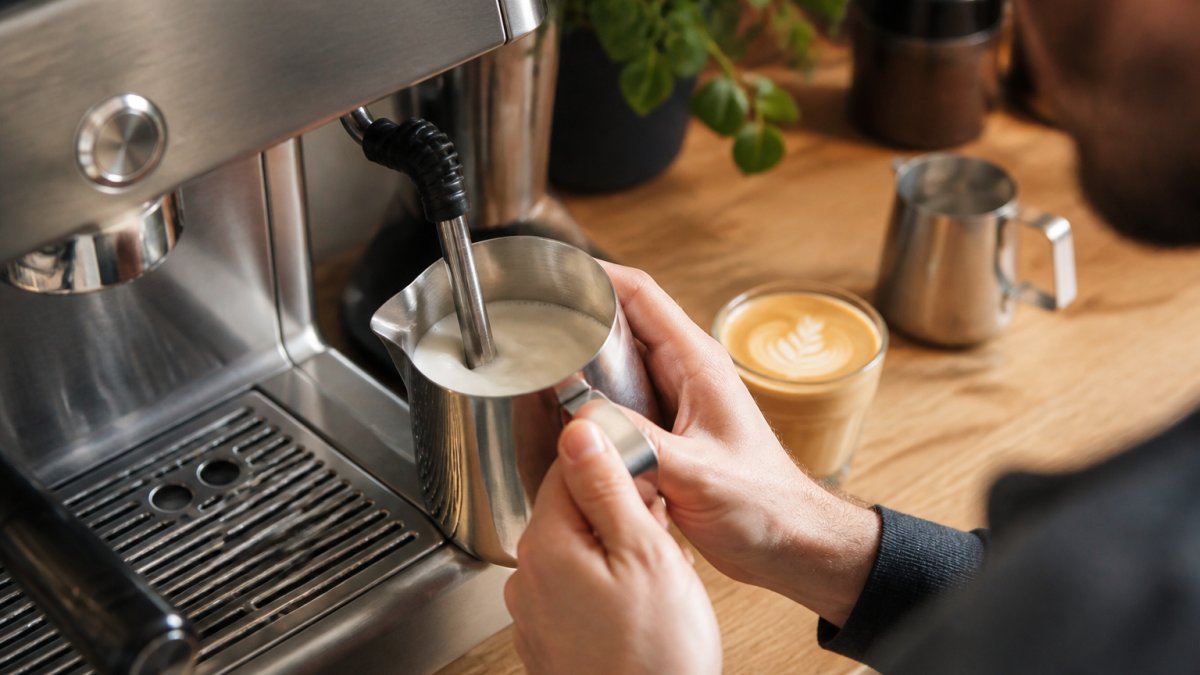
Start with a jug one-third full of cold milk, purge the wand for a second, then submerge the tip just below the surface. Open the steam and hold the jug steady as air is drawn in for two or three seconds, then raise the jug so the tip sits deeper and creates a rolling whirlpool. Stop when the jug feels too hot to hold comfortably against your palm, swirl, and pour.
Three mistakes account for most failed microfoam. Over-aerating in the first seconds creates stiff foam that blobs on top. Letting the milk sit after steaming separates it, so swirl immediately and pour within seconds. Using a jug that is too large for the volume of milk makes the whirlpool impossible to establish.
Alternative milks behave differently. If your machine has automatic milk texturing with alternative milk settings, use them, they adjust temperature and aeration for each type, which is far more reliable than guessing.
Machine-specific steam performance matters. A dual boiler with a dedicated steam boiler delivers dry, powerful steam that stretches milk in seconds. A single boiler or thermoblock machine (like the Bambino) has a smaller steam capacity, so you may need to steam in smaller batches and accept slightly wetter steam. Manual wands give you full control but require practice; automatic texturing removes the learning curve but limits your ability to adjust on the fly.
If you would rather buy the equipment than improvise, browse our milk frothing and steaming tools for jugs and wands that make the process repeatable.
Total Cost of Ownership: What a Latte Habit Really Costs
Purchase price is the smallest part of the equation. A machine is a one-off cost spread across years, while beans, milk, water filters, descaler and cleaning tablets recur monthly. Add the occasional service and the sums shift: a £1,099.96 Dual Boiler used daily for several years costs far less per drink than its sticker price suggests, because the machine is amortised across hundreds of lattes.
Compare ongoing costs by machine type. A pod-based machine seems cheap upfront, but pods cost £0.40-£0.70 each, so two lattes a day adds up to £290-£510 per year before milk. A bean-to-cup or semi-automatic machine uses whole beans at roughly £0.15-£0.25 per shot (based on a £7-£9 bag of beans making 30-40 doubles), plus milk at about £0.10-£0.15 per latte. A manual machine with a separate grinder has the lowest ingredient cost but may need a £50-£100 grinder service every few years. Water filters cost £15-£25 each and should be changed every 2-3 months depending on hardness; descaler is £10-£15 per treatment. Cleaning tablets and backflush detergent add another £20-£30 per year.
The hidden cost of wasted milk.
Maintenance is not optional. Descale on the schedule your water hardness demands, backflush regularly, and change water filters as instructed.
Choosing Your Espresso Machine at Coffee Craft Studio
Match the machine to the drinker, not to the brochure. A household making two lattes a day should prioritise steam power and dual boiler workflow. A single espresso drinker with a small kitchen should prioritise footprint and heat-up speed. A beginner who wants consistency before skill should prioritise guided automation.
If you are ready to buy and want help narrowing the range, our guide on how to choose your first professional espresso machine walks through the decision in order. Every machine we stock is selected for precision and consistency, from the £329.95 Bambino to the La Marzocco Linea Mini at £4,786.00 with its 3-litre steam boiler.
Coffee Craft Studio stocks a curated range built for precision and consistency, including dual boiler machines for simultaneous brewing and steaming, automatic milk texturing with alternative milk settings, and compact models for limited counter space. Get started with Coffee Craft Studio and build a latte routine that tastes the same on a Tuesday morning as it does on a Sunday.
Frequently Asked Questions
What features should I look for in an espresso machine for lattes?
Prioritise steam performance and workflow over shot-count specs. A dedicated steam boiler or a powerful thermocoil gives you dry, consistent steam for silky microfoam, while a dual boiler lets you brew and steam at the same time. Look for adjustable milk temperature and texture if you drink oat or almond milk, a steam wand you can also use manually for latte art, and a machine whose footprint fits your counter. Grinder quality matters too, since a flat, bitter shot will taste wrong no matter how good the milk is.
Is a manual or automatic espresso machine better for lattes?
It depends on how much control you want. Automatic machines handle grinding, dosing, tamping and milk texturing, so you get repeatable lattes with almost no learning curve, which suits busy mornings and households where several people brew. Manual and semi-automatic machines give you direct control over grind size, dose and steam pressure, so you can refine texture and flavour over time. If you mainly drink milk-based drinks and value speed, automation wins. If you enjoy the craft, a manual setup rewards the practice.
Can you make a latte with a super-automatic espresso machine?
Yes. Bean-to-cup and super-automatic machines grind, brew and texture milk in one sequence, and many include latte and cappuccino presets with adjustable milk texture and temperature. The trade-off is that the steam wand is often automatic rather than a manual wand, so you get consistency rather than hands-on latte art control. Models such as the Sage Oracle Dual Boiler offer both: fully automated brewing for everyday drinks and a manual mode when you want to take over.
How do you steam milk for a smooth latte at home?
Fill a stainless steel jug to roughly a third with cold milk, purge the steam wand, then submerge the tip just below the surface. Introduce air for the first few seconds to build volume, then lower the tip to create a rolling whirlpool that folds the foam into the milk. Aim for a glossy, paint-like microfoam with no large bubbles. Knock the jug on the counter and swirl before pouring. Use your machine's alternative milk settings if it has them.
How often should you clean an espresso machine used for milk drinks?
Milk residue is the main maintenance issue on any machine used for lattes, so wipe the steam wand with a damp cloth and purge it after every use. Backflush the group head at the end of each day if your machine supports it, and run a cleaning cycle with tablets weekly. Descale on the schedule your manufacturer specifies, which depends on your water hardness. Using filtered water and a water filter reduces scale build-up and keeps brew temperature stable over the life of the machine.
