

Professional Espresso Machine for Home: 2026 Guide
Table of Contents
- What Makes a Professional Espresso Machine Suitable for Home
-
Best Professional Espresso Machines for Home: Top Selections
- Sage Barista Express: Best for Beginners Seeking Professional Results
- Sage Dual Boiler: Premium Prosumer Performance with PID Control
- Graef Estessa: Advanced Pressure Profiling for Extraction Mastery
- Sage Oracle Touch: Automation Meets Professional-Grade Capability
- Faema Faemina: Smart Home Integration with Voice Control
- Commercial vs Home Espresso Machine: Key Differences Explained
- Best Espresso Grinder for Home: The Grinder Requirements
- How to Pull a Perfect Espresso Shot: Technique and Process
- Espresso Machine Maintenance Tips for Long-Term Performance
- Long-Term Ownership Costs: What to Budget Beyond the Purchase
- Water Chemistry and Filtration for Superior Extraction
Professional Espresso Machine for Home: 2026 Guide
Last Updated: July 14, 2026
A professional espresso machine for home has transformed from a luxury curiosity into an accessible reality for serious coffee enthusiasts. According to Specialty Coffee Association market research, home espresso equipment sales have grown steadily as manufacturers developed machines delivering café-quality results without requiring commercial kitchen space.
What Makes a Professional Espresso Machine Suitable for Home
Professional-grade home machines deliver consistent water temperature, precise pressure control, and repeatable extraction. They typically feature PID temperature controllers (maintaining water temperature to within 0.5°C), dual-boiler systems for simultaneous brewing and steaming, or thermoblock technology for rapid heat recovery.
The real distinction comes down to control. Professional machines let you adjust variables, pre-infusion pressure, flow rate, water temperature, that directly impact flavour. For home use, semi-automatic machines with PID control represent the sweet spot: you retain enough control to improve, but the machine handles variables requiring expensive sensors.
Best Professional Espresso Machines for Home: Top Selections
Sage Barista Express: Best for Beginners Seeking Professional Results
The Sage Barista Express combines integrated grinding with manual milk texturing at an entry price that eliminates choosing between a grinder and machine. The built-in burr grinder delivers 30 grind settings, preserving aromatics by grinding fresh beans directly into the portafilter.
The PID temperature control maintains consistent brewing temperature. The steam wand delivers enough power for microfoam milk texturing, though it requires practice. The compact footprint suits limited kitchen space.
The integrated grinder produces slightly coarser particles than dedicated burr grinders, affecting extraction subtly. The water tank capacity is modest, requiring refills for more than 3-4 consecutive drinks. The portafilter is smaller than industry-standard 58mm, limiting upgrade options later.
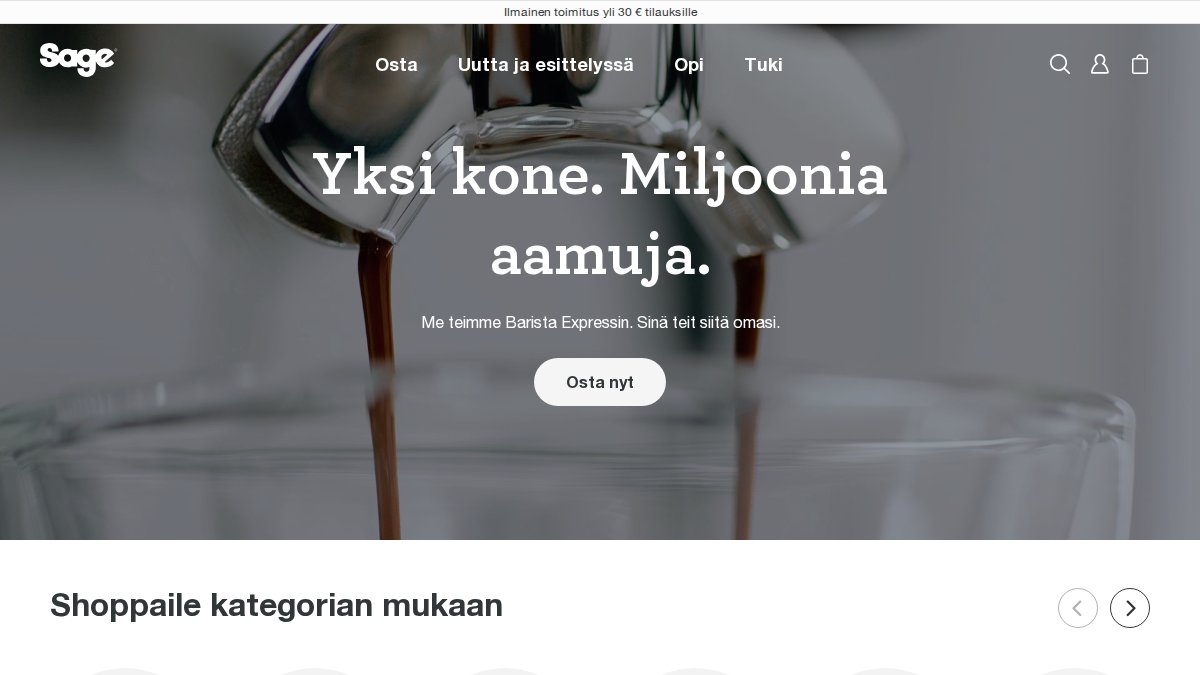
The Sage Barista Express costs £629.95 and represents genuine value for someone entering specialty coffee.
Sage Dual Boiler: Premium Prosumer Performance with PID Control
The Sage Dual Boiler separates brewing and steam functions into independent boilers, eliminating temperature surfing. You brew espresso from one boiler whilst simultaneously steaming milk from another.
The 58mm portafilter is industry standard, allowing experimentation with different baskets and tools. The PID controller maintains temperature to within 1°C on both boilers. Pre-infusion capability gradually increases pressure before the full shot, improving extraction consistency.
The dual-boiler design adds maintenance complexity. Descaling requires attention to both boilers, and the machine demands regular backflushing. The footprint is substantial, roughly 60cm wide. The learning curve is steeper than entry machines.
The Sage Dual Boiler costs £1,111.07 and suits home baristas ready to move beyond integrated grinders.
Graef Estessa: Advanced Pressure Profiling for Extraction Mastery
The Graef Estessa introduces pressure profiling, allowing you to adjust pressure during the shot to manipulate flavour extraction. A dual-pump system with a manual paddle lets you control flow rate in real time. The PID controller maintains water temperature independently from the pressure system.
Pressure profiling lets advanced baristas experiment with pre-infusion, ramp-up, and decline phases. This level of control produces noticeable flavour differences in sweetness, body, and brightness. The 58mm portafilter accepts standard baskets and accessories.
Pressure profiling adds a learning phase. Beginners will pull better shots with machines that handle pressure automatically. The manual paddle requires developing muscle memory. The machine costs £1,665.00 and suits experienced home baristas.
Sage Oracle Touch: Automation Meets Professional-Grade Capability
The Sage Oracle Touch automates variables that intimidate beginners whilst preserving professional output. An automatic tamper removes inconsistency from tamping. The touchscreen interface guides you through shot parameters, and the machine adjusts temperature and pressure automatically based on selected recipes.
Dual-boiler architecture enables simultaneous brewing and steaming. Automatic milk texturing produces microfoam without manual technique. Pre-set drink recipes adjust water volume and temperature automatically.
Automation reduces control. You can't experiment with pressure profiling or unconventional extraction techniques. The price reflects the automation: £2,099.95. This machine suits busy professionals prioritising consistency and convenience.
Faema Faemina: Smart Home Integration with Voice Control
The Faema Faemina integrates app-based control and voice activation. You can schedule pre-heating, adjust temperature remotely, and pull shots using voice commands. The machine logs shot data, creating a record of your brewing patterns.
Pre-heating from bed means the machine is ready when you reach the kitchen. The app displays water hardness alerts and maintenance schedules. The dual-boiler system ensures temperature stability.
Smart features add cost and complexity. WiFi connectivity requires reliable network coverage. The machine costs £6,330.00, positioning it as a premium choice for technology-forward enthusiasts.
Commercial vs Home Espresso Machine: Key Differences Explained
Commercial machines prioritise throughput, pulling dozens of shots daily. Home machines prioritise consistency and ease of use for occasional pulling.
Commercial machines feature larger boilers (5-15 litres) maintaining temperature across extended sessions. Home machines use smaller boilers (1-2 litres) for 2-4 drinks per session. Commercial group heads are oversized for durability; home group heads are proportioned for single-user wear patterns. Commercial machines demand professional maintenance; home machines tolerate longer intervals.
Commercial machines use rotary pumps delivering consistent pressure regardless of water line pressure. Home machines often use vibration pumps, which are quieter but slightly less stable.
Best Espresso Grinder for Home: The Grinder Requirements
Your grinder determines extraction quality more directly than your machine. A mediocre machine with an excellent grinder produces better espresso than an excellent machine with a mediocre grinder.
Burr grinders outperform blade grinders because burrs cut beans to uniform size, whilst blades smash them randomly. For home use, a burr grinder with stepless adjustment gives you flexibility as you develop technique.
Grind size affects extraction directly. Finer grinds increase surface area, slowing water flow and extending extraction time. Coarser grinds speed water flow, shortening extraction. The ideal grind size produces a 25-30 second shot that tastes balanced, neither sour nor bitter.
Brushless motors produce less heat and run more quietly than brushed motors. Single-dose grinders preserve flavour better than grinders holding beans in a hopper. The Timemore Sculptor 064S offers brushless motor technology with stepless adjustment at £545.00.
How to Pull a Perfect Espresso Shot: Technique and Process
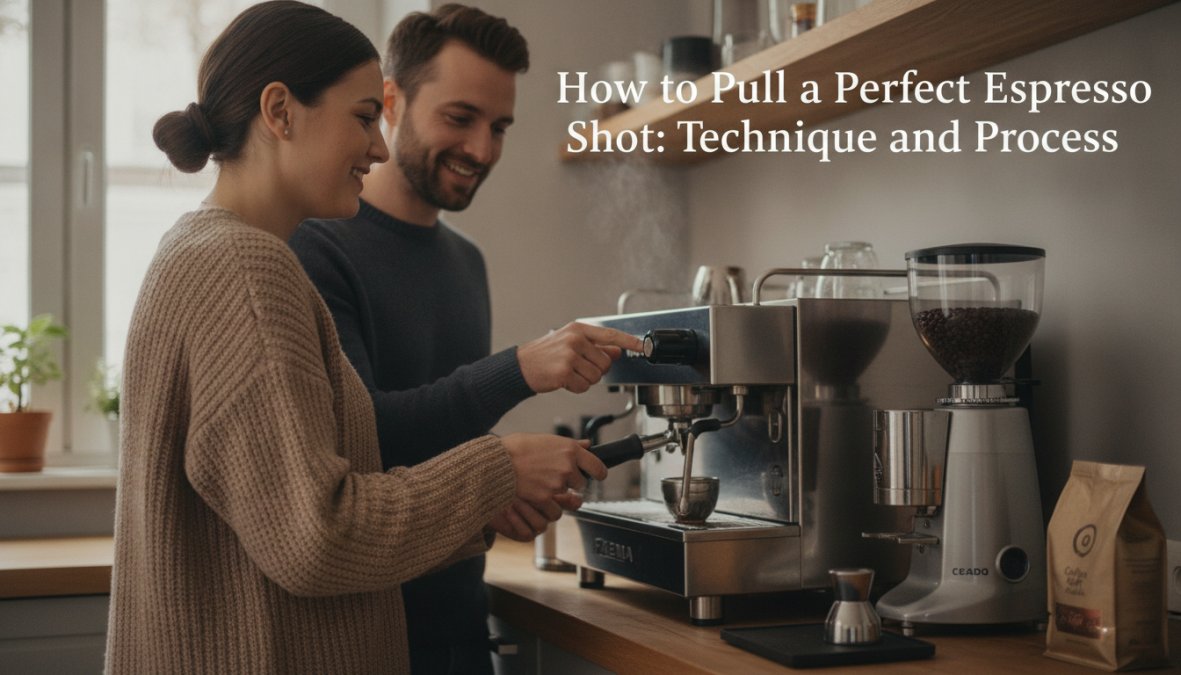
Pulling a shot involves five key phases: distribution, tamping, pre-infusion, extraction, and timing.
Distribution prepares the coffee puck. After grinding into the portafilter, distribute grounds evenly using a distribution tool. This prevents water from channelling during extraction.
Tamping compresses the puck to consistent density. Apply downward pressure with a level motion; any angle introduces uneven density. Aim for roughly 30 pounds of pressure.
Pre-infusion gradually increases pressure before the full shot begins, allowing water to saturate the puck evenly before pressure forces extraction.
Extraction is the main event. Water flows through the puck at 9 bars of pressure, dissolving soluble compounds that create flavour. The ideal extraction lasts 25-30 seconds. Shorter shots taste sour; longer shots taste bitter. Grind size is your primary control.
Timing and observation complete the process. Watch the shot pour. It should start slowly, then accelerate to a steady stream, then taper slightly. The colour should progress from dark brown to lighter brown.
Espresso Machine Maintenance Tips for Long-Term Performance
Maintenance determines machine lifespan and shot quality.
Daily backflushing removes ground coffee particles from the group head. Insert the portafilter (without a basket) into the group head and activate water flow for 1-2 seconds, then stop. Repeat 5-6 times.
Weekly cleaning involves soaking the portafilter, basket, and shower screen in hot water with espresso machine cleaner for 15 minutes, then rinsing thoroughly.
Monthly descaling removes mineral buildup from the boiler and group head using a descaling product formulated for espresso machines.
Quarterly seal inspection prevents water leaks. If you notice water dripping from the group head when not pulling shots, seals likely need replacement. Seals cost £10-20.
Annual professional service (optional but recommended) involves a technician inspecting internal components and replacing worn parts. This costs £80-150 but prevents expensive emergency repairs.
Water quality affects maintenance demands substantially. Hard water requires more frequent descaling. Installing a water filter cartridge (£20-30, replaced every 2-3 months) reduces descaling frequency from monthly to quarterly.
Long-Term Ownership Costs: What to Budget Beyond the Purchase
The machine price is only the beginning.
Beans represent the largest recurring expense. Quality specialty coffee costs £8-12 per 250g bag, producing roughly 20-25 shots. Pulling 2-3 shots daily costs £40-60 monthly.
Maintenance supplies include descaling solution (£10 per bottle, lasting 2-3 descales), cleaning tablets (£15 per pack, lasting 10 weeks), and replacement seals (£10-20 annually). Budget roughly £30-40 monthly.
Water filtration costs £20-30 per cartridge, replaced every 2-3 months.
Grinder maintenance involves occasional burr replacement (£30-60, every 2-3 years) and cleaning supplies. Budget £5-10 monthly.
Professional servicing costs £80-150 annually.
A machine costing £1,000 will cost roughly £50-70 monthly in beans, supplies, and maintenance. Over five years, you'll spend £4,000-5,000 total. If you're pulling 2-3 shots daily, home espresso becomes economical within 18-24 months.
Water Chemistry and Filtration for Superior Extraction
Water quality directly affects extraction and machine longevity. Water hardness, the concentration of dissolved minerals, determines both flavour and maintenance demands.
Very soft water (under 50 ppm) extracts quickly, producing thin-bodied shots. Very hard water (over 200 ppm) extracts slowly, producing heavy-bodied shots. The ideal range is 75-150 ppm, balancing extraction speed with body and flavour complexity.
Most home water falls outside this range. Tap water in hard-water regions contains 200+ ppm minerals, requiring filtration. Filtered water in the ideal range produces noticeably better espresso than unfiltered tap water.
Water filters use activated carbon and ion-exchange resin to remove minerals and chlorine. Cartridge filters cost £20-30 and last 2-3 months. Use a cartridge filter in your machine's water tank to reduce descaling frequency from monthly to quarterly.
Selecting a professional espresso machine for home requires balancing skill level, budget, and maintenance commitment. The machines covered deliver consistent, café-quality extraction when properly maintained.
| Machine | Starting Price | Best For | Key Feature |
|---|---|---|---|
| Sage Barista Express | £629.95 | Beginners | Integrated grinder |
| Sage Dual Boiler | £1,111.07 | Developing baristas | Independent boilers |
| Graef Estessa | £1,665.00 | Advanced users | Pressure profiling |
| Sage Oracle Touch | £2,099.95 | Convenience seekers | Automatic tamping |
| Faema Faemina | £6,330.00 | Tech-forward enthusiasts | Smart home integration |
Frequently Asked Questions
Is a professional espresso machine worth it for home use?
Yes, if you consume espresso regularly and value café-quality results. A professional espresso machine for home delivers superior extraction, temperature stability via PID controllers, and consistent shot quality. Consider your budget, counter space, and commitment to maintenance. Models like the Sage Dual Boiler or Graef Estessa offer professional-grade performance without commercial-scale bulk. Factor in grinder costs and long-term maintenance when evaluating total investment.
What is the difference between a home and professional espresso machine?
Commercial machines prioritise high throughput, durability under constant use, and larger water reservoirs for café environments. Home professional machines feature compact footprints, quieter operation, and user-friendly interfaces. Commercial units typically require plumbed water and drain connections, whilst home machines use manual filling. Both can achieve barista-quality extraction, but home machines balance performance with domestic practicality, offering PID control, dual boilers, and pressure profiling in smaller formats.
How much should I spend on a professional home espresso machine?
Entry-level professional machines start around £630, whilst mid-range prosumer models range £1,100-£1,700. High-end dual-boiler systems cost £2,000-£3,300+. Budget should also include a quality burr grinder (£500+) and water filtration. Consider long-term costs: descaling agents, backflushing supplies, and potential repairs. The Sage Barista Express offers excellent value for beginners, whilst the Graef Estessa suits advanced users seeking pressure profiling capabilities.
What espresso machine maintenance tips ensure longevity?
Daily: backflush the group head and purge the steam wand. Weekly: deep-clean the portafilter and basket. Monthly: descale the boiler and group head using appropriate solutions. Check water hardness regularly and use filtered water to prevent mineral buildup. Inspect seals and gaskets annually. Professional servicing every 1-2 years maintains PID controllers and pump performance. Proper maintenance extends machine life significantly and preserves extraction quality and crema consistency.
Do I need a plumbed-in espresso machine for my home?
No. Most home professional espresso machines use manual water filling, offering flexibility in placement. Plumbed models require dedicated water lines and drainage, suited only to permanent installations. Manual-fill machines like the Graef Batessa or Sage models provide mobility and easier relocation. Plumbed systems reduce refilling frequency in high-use environments but complicate kitchen modifications. Choose based on your usage frequency, kitchen layout, and whether you value convenience over installation simplicity.
This article was written using GrandRanker