

How to Clean Espresso Machine Group Head
Table of Contents
- Why Group Head Cleaning Matters for Espresso Quality
- What You'll Need: Tools and Cleaning Products
- How to Backflush Your Espresso Machine Group Head
- How Often to Clean Your Espresso Machine Group Head
- Cleaning the Shower Screen and Portafilter Basket
- Using a Group Head Cleaning Brush for Effective Maintenance
- Replacing Your Espresso Machine Group Gasket
- Common Mistakes to Avoid When Cleaning Your Group Head
- Frequently Asked Questions
Last Updated: August 10, 2026
Why Group Head Cleaning Matters for Espresso Quality
The group head is where extraction happens. Coffee grounds sit in the portafilter basket, water forces through them at pressure, and flavour compounds dissolve into your cup. Coffee oils and residue accumulate on every surface, the shower screen, the gasket, the brew head itself. Over time, this buildup blocks water flow, creates uneven extraction, and leaves bitter, stale flavours in your espresso.
Clean group heads deliver consistent shots. Neglected ones produce disappointing results, no matter how good your beans or technique are. The difference between a clean group head and a dirty one isn't subtle, you'll taste it immediately. Water channels through the puck differently, extraction times shift, and the crema changes texture. A proper cleaning routine, backflushing, brushing, occasional deep cleaning, keeps your machine performing at the level it was designed for.

What You'll Need: Tools and Cleaning Products
You don't need much to maintain your espresso machine group head effectively. A few dedicated tools and the right cleaning products make the process straightforward.
Essential tools:
- Blind basket (a portafilter basket with no holes, used for backflushing)
- Group head cleaning brush (soft nylon bristles, specifically designed for espresso machines)
- Microfibre cloth or lint-free cloth
- Small bowl or cup for soaking parts
Cleaning products: For backflushing and regular maintenance, you'll want cleaning powder designed for espresso machines. Sage Espresso Cleaning Tablets are formulated to remove coffee oils and residues from the shower screen and filter basket without damaging internal components. For deeper descaling, removing mineral scale that builds up from hard water, Sage The Descaler (Pack of 4) is specifically formulated for espresso machines and coffee equipment.

You don't need expensive specialist equipment. A basic nylon brush, a blind basket, and quality cleaning powder are sufficient for regular maintenance that keeps your group head in top condition.
How to Backflush Your Espresso Machine Group Head
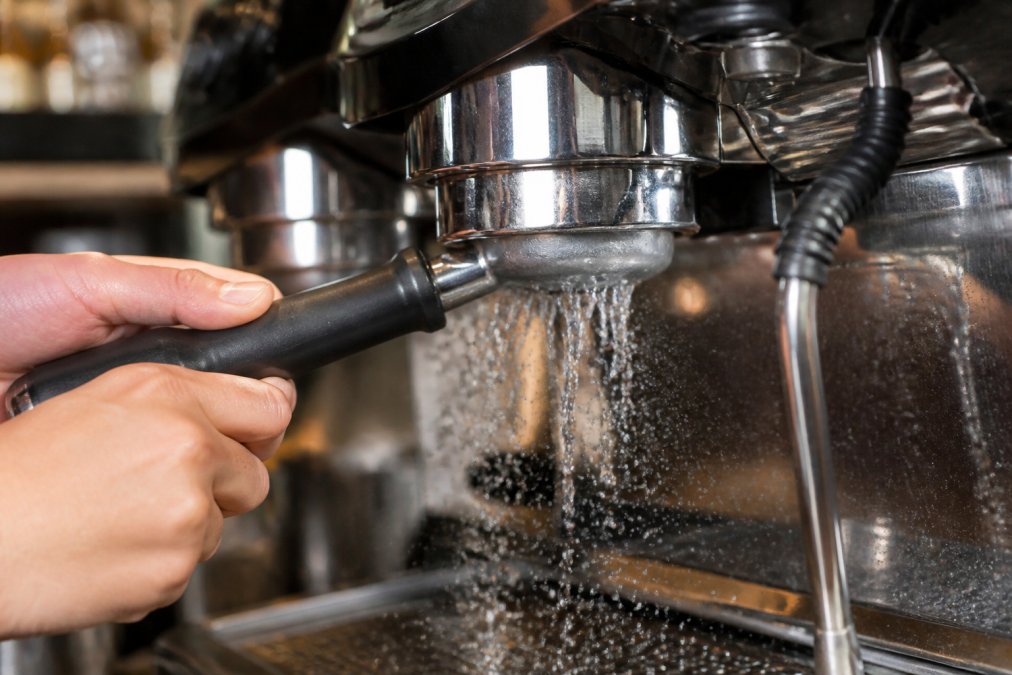
Backflushing forces water backwards through the group head, pushing out coffee oils and residue that accumulate during normal brewing. It's the most effective daily maintenance step you can take.
Important: Not all espresso machines support backflushing. Machines with rotary pumps can handle it safely. Machines with vibration pumps risk damage if you backflush without a solenoid valve fitted. Check your machine's manual first.
Step-by-step backflushing process
Step 1: Prepare your machine Turn on your espresso machine and let it reach operating temperature. Run water through the group head for 10-15 seconds to warm it fully.
Step 2: Insert the blind basket Remove your regular portafilter basket and insert the blind basket. Lock the portafilter into the group head as you would during normal brewing.
Step 3: Activate the pump Turn on the pump and let water flow through for 2-3 seconds. You'll see water spray out around the portafilter seal.
Step 4: Stop the pump Turn off the pump and wait 1 second. The pressure releases.
Step 5: Repeat the cycle Repeat steps 3 and 4 five to ten times. Each cycle pushes water backwards, dislodging residue.
Step 6: Finish with a dry purge After your final backflush cycle, leave the pump running for 2-3 seconds without the portafilter inserted. This purges water from the group head and prevents moisture from sitting inside.
Backflush once daily after your last shot of the day. It takes three minutes and prevents the buildup that leads to stale flavours and uneven extraction.
Using cleaning powder for deeper backflushing
Once or twice per week, add cleaning powder to your backflushing routine for a deeper clean. Dissolve a cleaning tablet in a small bowl of hot water until fully dissolved. Insert your blind basket into the portafilter and apply the solution to the blind basket and around the portafilter seal. Lock it into the group head.
Run the backflush cycle as normal, pump on for 2-3 seconds, pump off, repeat. The cleaning powder reacts with coffee oils and helps dissolve them. After five to ten cycles, remove the portafilter and run plain water through the group head without the portafilter for 10-15 seconds. This rinses away all cleaning powder residue.
Cleaning powder backflushing is more aggressive than water alone. Don't do it daily; once or twice per week is sufficient.
How Often to Clean Your Espresso Machine Group Head
Cleaning frequency depends on how much you use your machine. A daily routine, a weekly routine, and a monthly routine will keep your group head in excellent condition.
Daily cleaning: After your last shot of the day, backflush with water only. Lock in the blind basket, run the pump for 2-3 seconds, release pressure, and repeat five times. Finish with a dry purge.
Weekly cleaning: Once per week, do a deeper backflush with cleaning powder. Dissolve a cleaning tablet, backflush with the solution five to ten times, then rinse thoroughly with plain water.
Monthly cleaning: Once per month, soak your shower screen and portafilter basket in a cleaning solution. Dissolve a cleaning tablet in hot water and let these parts soak for 15-20 minutes. Scrub gently with a soft brush, rinse thoroughly, and dry completely before reassembling.
Some machines benefit from a full descaling every three months if your water is hard. Hard water deposits mineral scale inside the group head and pipes, restricting water flow.
Cleaning the Shower Screen and Portafilter Basket
The shower screen distributes water evenly across the coffee grounds. The portafilter basket holds the grounds. Both accumulate coffee oils and residue.
Cleaning the shower screen: After your final shot of the day, remove the shower screen by unscrewing or unclipping it. Rinse it under hot running water immediately. Use a soft brush to gently scrub away any residue. Don't use abrasive pads, they scratch the screen and create crevices where oils hide.
Once per week, soak the shower screen in a cleaning tablet solution for 15 minutes. Scrub gently, rinse thoroughly, and dry completely before reinstalling.
Cleaning the portafilter basket: After each shot, knock out the spent grounds and rinse the basket under hot water immediately. Use your fingers or a soft brush to remove any grounds stuck inside. Don't let residue dry.
Once per week, soak your portafilter basket in a cleaning tablet solution for 15-20 minutes. Scrub gently with a soft brush, paying special attention to the holes. Rinse thoroughly and dry completely.
Using a Group Head Cleaning Brush for Effective Maintenance
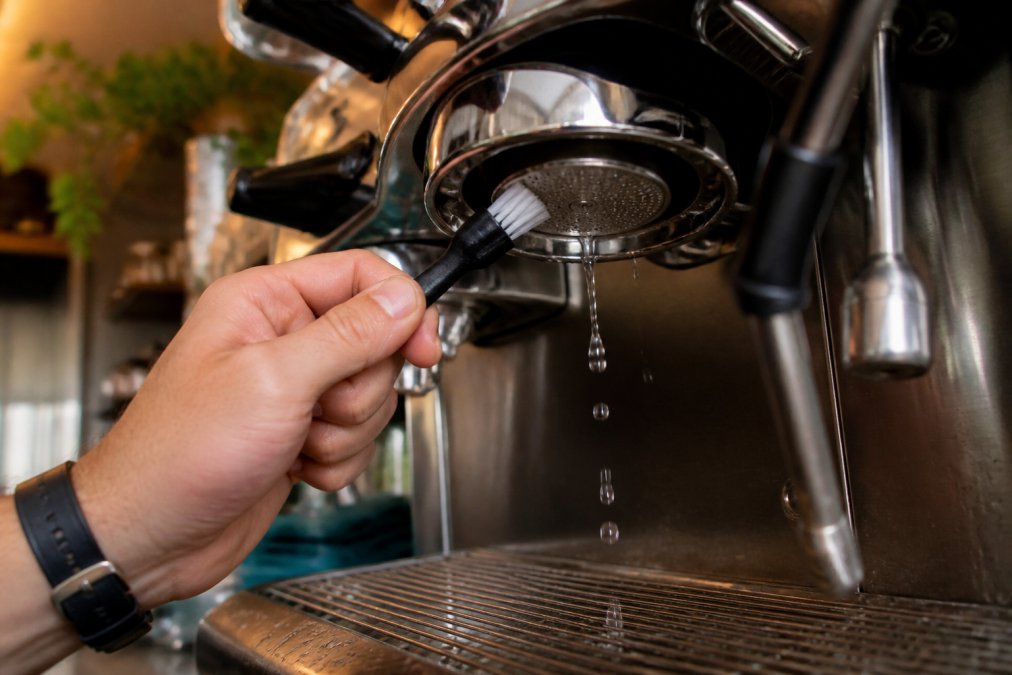
A proper group head cleaning brush has soft nylon bristles designed to scrub without scratching metal surfaces, and it's sized to fit into the group head cavity.
Daily brush cleaning: After backflushing, whilst the group head is still hot, use your cleaning brush to scrub the shower screen area gently. Focus on the small holes where water flows through. Brush in a circular motion, applying light pressure.
Weekly deeper scrubbing: Once per week, after soaking your shower screen in cleaning solution, use the brush to scrub it more thoroughly. Pay attention to the underside of the screen where oils accumulate.
Monthly group head gasket scrubbing: Once per month, use your brush to scrub around the gasket groove gently. You're not trying to remove the gasket, just clean the surfaces around it.
Replacing Your Espresso Machine Group Gasket
The group head gasket is a rubber seal that sits in a groove around the inside of the brew head. It creates a watertight seal when you lock in your portafilter. Over time, it hardens, shrinks, and loses its sealing ability. When this happens, water leaks around the portafilter, pressure drops, and extraction becomes inconsistent.
Signs your gasket needs replacement
A gasket typically lasts 12-24 months with regular use, depending on water quality and cleaning frequency.
Visual signs: If the gasket is visibly cracked, shrunken, or discoloured, it needs replacement. A healthy gasket is smooth, evenly coloured, and sits flush in its groove.
Performance signs: Water leaking around the portafilter when locked in is the clearest sign. Extraction time may also change, and pressure may fluctuate during extraction when it used to stay steady.
Age-based replacement: Even if your gasket looks fine, replace it every 18-24 months as preventative maintenance.
Step-by-step gasket replacement guide
Step 1: Turn off and cool your machine Turn off your espresso machine and let it cool for 15-20 minutes.
Step 2: Remove the group head Most espresso machines have a removable group head. Check your manual for the specific method. Remove the group head carefully and set it on a clean surface.
Step 3: Locate and remove the old gasket The gasket sits in a groove around the inside of the group head. If there's a retaining ring, unscrew or unclip it gently. Pull out the old gasket using a plastic tool (not metal, which can scratch).
Step 4: Clean the gasket groove Use a soft brush and hot water to clean the groove thoroughly. Remove any hardened rubber pieces, mineral deposits, or coffee oil residue.
Step 5: Insert the new gasket Gaskets come in standard sizes for each machine model. Gently press the new gasket into the groove, working your way around. It should sit evenly and flush with the metal surface.
Step 6: Reinstall the retaining ring (if applicable) If your machine has a retaining ring, screw or clip it back in place gently.
Step 7: Reassemble the group head Reinstall the group head on your machine, following the manufacturer's instructions. Tighten bolts or clips evenly.
Step 8: Test for leaks Turn your machine back on and let it reach operating temperature. Lock in your portafilter with the blind basket. Run the pump for a few seconds and look for leaks around the seal. Water should not drip from the sides.
Common Mistakes to Avoid When Cleaning Your Group Head
Most group head problems come from cleaning mistakes rather than lack of cleaning.
Using abrasive materials: Never use steel wool, scouring pads, or hard brushes on your group head. These scratch the metal surface, creating crevices where coffee oils hide. Stick to soft nylon brushes and microfibre cloths.
Backflushing without a blind basket: Backflushing without the blind basket wastes water and doesn't clean effectively. Always use a blind basket.
Forgetting to rinse after cleaning powder: Cleaning powder left inside the group head affects flavour and can damage seals. After backflushing with cleaning powder, always run plain water through the group head for 10-15 seconds.
Letting residue dry: Dried coffee oil is much harder to remove than fresh residue. Clean your group head immediately after use, whilst everything is still hot and wet.
Overtightening the portafilter: Locking the portafilter in too tightly compresses the gasket excessively and causes premature wear. Lock it in firmly but don't force it.
Ignoring hard water: Hard water deposits mineral scale inside your group head and pipes. If your water is hard, descale your machine every three months.
Replacing the gasket too late: A failing gasket damages seals and other components. Replace it at the first sign of wear.
Keeping your espresso machine group head clean is the foundation of consistent, delicious espresso. Daily backflushing, weekly powder cleaning, and monthly soaks take less than five minutes per week. The payoff is immediate: better extraction, cleaner flavours, and a machine that performs reliably for years.
At Coffee Craft Studio, we understand the importance of proper maintenance. Machines treated with care deliver café-quality results consistently. The right tools, a soft brush, a blind basket, and quality cleaning products like Sage Espresso Cleaning Tablets, make the routine effortless. Sage The Descaler handles hard water deposits that restrict flow and compromise extraction. These products are designed specifically for espresso machines, so they work safely without damaging seals or internal components.
Start with daily backflushing today. You'll taste the difference immediately, and your machine will perform at the level it was designed for.
Frequently Asked Questions
How often should I clean my espresso machine group head?
Daily backflushing without a basket keeps the group head clear of coffee grounds and oils. Use the blind basket with cleaning powder twice weekly for deeper cleaning. Monthly deep cleaning with dedicated espresso cleaning tablets removes stubborn residue buildup. If you brew more than 10 shots daily, increase backflushing frequency to maintain optimal water flow and extraction quality.
What's the best method for how to backflush espresso machine?
Insert the blind basket (no holes) into the portafilter and lock it into the group head. Activate the pump for 1-2 seconds, then release pressure. Repeat 5-10 times daily to purge coffee oils and grounds. For deeper cleaning, use cleaning powder in the blind basket twice weekly. This removes residue that builds up inside the solenoid valve and prevents scale accumulation affecting pump pressure.
How do I know when my group head gasket needs replacing?
Inspect the gasket monthly for hardening, cracking, or visible wear. If water leaks from the group head during brewing, or if the portafilter doesn't lock firmly, the gasket has likely deteriorated. A worn gasket compromises extraction consistency and allows coffee oils to bypass the basket. Most gaskets last 12-18 months with proper care. Replace immediately if you notice pressure loss or uneven water distribution across the shower screen.
Can I use vinegar to clean my espresso machine group head?
No. Vinegar is too acidic and can damage internal seals, the solenoid valve, and metal components. Use only espresso-specific cleaning solutions designed for group head maintenance. Sage Espresso Cleaning Tablets and Sage The Descaler are formulated to remove coffee oils and scale safely without harming gaskets or internal plumbing. Always rinse thoroughly with hot water after chemical cleaning to prevent residue affecting your next brew.
This article was written using GrandRanker