

Essential Espresso Brewing Tools for Home Baristas
Table of Contents
- Why the Right Espresso Brewing Tools Matter
- The Importance of a Consistent Coffee Grinder
- Espresso Puck Preparation Techniques and Equipment
- Precision Espresso Scales and the Importance of Coffee Scales for Espresso
- How to Choose a Milk Steaming Pitcher and Temperature Control
- Knock Boxes, Waste Management and Workflow Efficiency
- Maintenance Tools and Long-Term Equipment Care
- Building Your Complete Espresso Setup
- Frequently Asked Questions
Last Updated: September 18, 2026
Why the Right Espresso Brewing Tools Matter
Building a home espresso setup that delivers café-quality results depends far less on expensive machines than most people think. What actually separates a mediocre shot from an exceptional one is the precision of your preparation process, and that's where essential espresso brewing tools come in.
The difference between consistency and chaos in espresso comes down to control. A professional barista doesn't just pull lever and hope. They measure their coffee dose to the gram, tamp with calibrated pressure, monitor extraction time, and steam milk to exact temperature. Each step eliminates variables. Each tool you add removes guesswork.
At Coffee Craft Studio, we help home baristas understand which tools genuinely matter and which ones are nice-to-have extras. The equipment you choose shapes your entire workflow. Poor grind consistency ruins extraction before anything else happens. Inconsistent tamping creates channeling and weak shots. Guessing your brew ratio means you're flying blind. The right espresso brewing tools transform this from trial-and-error into repeatable craft.
This guide covers the essential espresso brewing tools that move the needle on shot quality, workflow efficiency, and long-term machine reliability. We'll walk through each category, explain what makes a tool worth buying, and show you how professional setups actually work.
The Importance of a Consistent Coffee Grinder
Your grinder is the single most important tool in your espresso setup. Not your machine. Your grinder.
A consistent coffee grinder determines grind retention, particle size distribution, and dose consistency, three factors that directly control extraction yield and shot quality. Most entry-level burr grinders produce uneven particle sizes that create channeling, where water finds paths of least resistance through the coffee puck instead of extracting evenly.
The Sage Smart Grinder Pro features 60 grind settings with Dosing IQ technology, allowing you to program grind time in 0.2-second increments. This means you can dial in an exact dose for espresso without weighing beans separately. The conical burr design produces consistent particle size across the full range from fine espresso to coarse French press grind. Fresh grinding directly into the portafilter maximises aroma and flavour by reducing time between grinding and extraction.

What matters most in a grinder is burr quality and consistency. Flat burrs tend to produce more uniform particles, but conical burrs work exceptionally well for espresso when properly engineered.
Grind retention, the amount of coffee that sticks to the burr chamber, is another critical factor. Lower retention means fresher coffee in every portafilter.
Espresso Puck Preparation Techniques and Equipment
An evenly prepared coffee puck is the foundation of repeatable espresso extraction. The puck, the compressed coffee cake in your portafilter, must have uniform density throughout, or water will channel through weak spots and skip over dense areas.
Traditional hand tamping requires practice to develop consistent pressure and angle. Consistency matters more than absolute pressure. A slight tilt, uneven pressure distribution, or twist at the wrong moment creates an uneven puck that extracts poorly.
The Sage Barista Express Impress addresses this with the Impress Puck System: an assisted tamping mechanism that applies a consistent 10kg tamp followed by a subtle 7° barista-style twist. This removes the learning curve for puck preparation and creates a more polished, even coffee puck every time. The system helps reduce mess during dosing and tamping, which matters when you're making multiple shots daily.

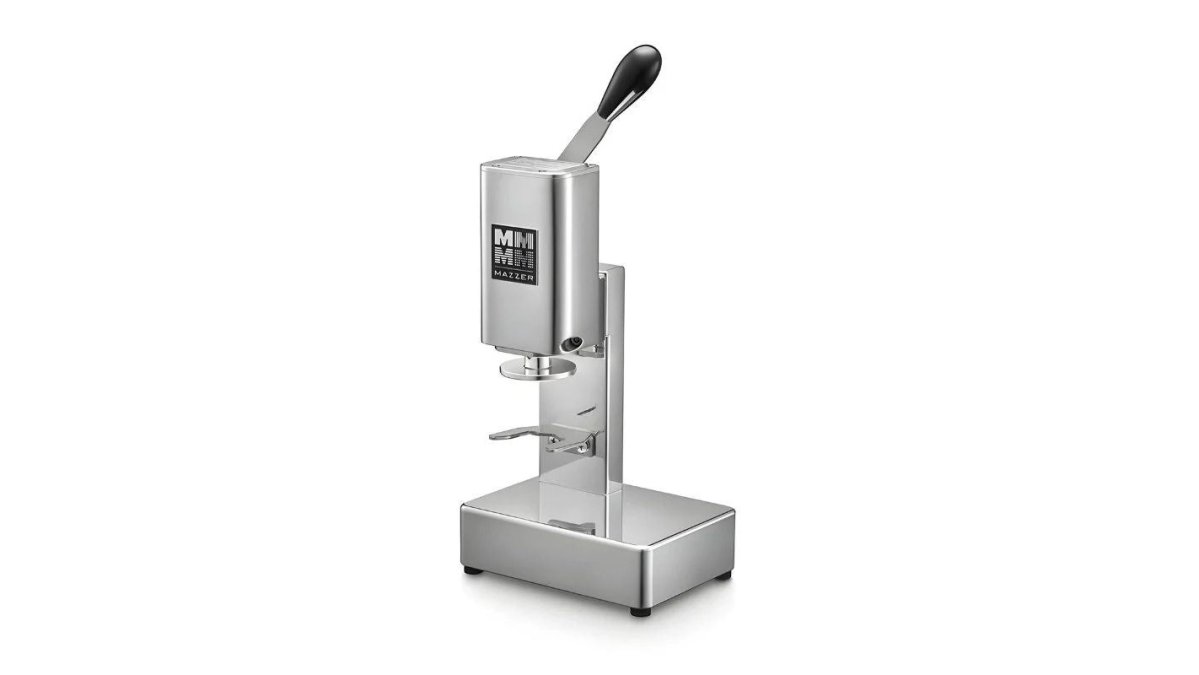
For those wanting manual control, the Mazzer Easy Tamper with Base delivers professional-grade consistency. It applies constant pressing force through a rotating aluminium disc that simulates the natural 30° wrist rotation of hand tamping. This is particularly valuable in commercial environments where multiple baristas share the same espresso station, it standardises the tamping stage and reduces variation between operators.
Precision Espresso Scales and the Importance of Coffee Scales for Espresso
Espresso is a ratio-based extraction. The importance of coffee scales for espresso cannot be overstated, they're the only way to dial in your brew ratio accurately and repeat it.

The standard espresso brew ratio is 1:2 to 1:3 (input to output). A 20g dose typically yields 40-60g of liquid espresso. Without scales, you're guessing. With scales, you measure.
The Hario V60 Drip Coffee Scale delivers 0.1g accuracy with an integrated timer, letting you measure both weight and extraction time simultaneously. This dual measurement is essential: you want to know not just how much espresso you've extracted, but how long the extraction took. Shots that run too fast (under 20 seconds) taste sour and thin. Shots that run too long (over 35 seconds) taste bitter and over-extracted.
Sage Barista Express Impress Espresso →
Precision scales transform espresso from art into repeatable science. You measure your dry dose, pull the shot, measure the liquid output, and record the time. Next time, you use the exact same inputs to achieve the same result.
Many home baristas skip scales thinking they'll "learn by feel." This delays progress by months. Scales give you immediate feedback on what's actually happening in your puck, letting you make informed adjustments to grind size, dose, or tamping pressure.
A quality espresso scale should:
- Measure to 0.1g accuracy minimum
- Have a built-in timer for tracking extraction time
- Display weight and time simultaneously
- Auto-off after 5 minutes to preserve battery
How to Choose a Milk Steaming Pitcher and Temperature Control
Milk texturing separates espresso drinks from espresso shots. The quality of your microfoam determines whether your cappuccino tastes silky or grainy.
The Sage Barista Touch Impress includes the Auto MilQ steam system, which creates microfoam automatically with adjustable temperature settings from 40°C to 75°C. For those wanting manual control, the steam wand can be operated traditionally for barista-style milk texturing and latte art. This flexibility matters: automatic texturing is faster and more consistent for daily drinks, but manual control teaches you the craft.
Temperature control is critical.
Knock Boxes, Waste Management and Workflow Efficiency
A knock box is a simple tool that transforms your workflow. Strike your portafilter against the knock bar and the spent coffee puck ejects cleanly into the container below. No mess. No hands touching hot grounds.
Maintenance Tools and Long-Term Equipment Care
Espresso machines require regular maintenance to perform consistently. Hard water deposits scale internal channels, reducing water flow and heat transfer. Without descaling, your machine's performance degrades gradually until shots taste flat and extraction times lengthen.
Building Your Complete Espresso Setup
Entry-level setup (£1,000-1,500):
- Sage Barista Express Impress (£729.95), integrated grinder and machine in one
- Sage Knock Box 10 (£29.95), waste management
- Hario V60 Drip Coffee Scale (£69.00), measurement
- Sage Descaler (£14.95), maintenance
Intermediate setup (£2,000-2,500):
- Sage Barista Touch Impress (£1,199.95), touchscreen guidance and automatic milk texturing
- Sage Smart Grinder Pro (£209.95), dedicated precision grinder with Dosing IQ
- Mazzer Easy Tamper (£627.60), professional tamping consistency
- Hario V60 Scale, Knock Box, Descaler, Water Filter
Professional setup (£3,000+):
The progression is clear: grinder quality first, then machine capability, then workflow optimization tools. Each tier adds consistency and reduces the learning curve.
| Component | Entry Level | Intermediate | Professional |
|---|---|---|---|
| Machine | Barista Express Impress | Barista Touch Impress | Dual Boiler or Lever |
| Grinder | Integrated | Sage Smart Grinder Pro | Commercial Grinder |
| Tamper | Assisted (Impress) | Mazzer Easy Tamper | Professional Lever |
| Scales | Hario V60 | Hario V60 | Precision Espresso Scale |
| Milk Pitcher | Basic | Stainless Steel 600ml | Professional Latte Art |
| Cost | £1,000-1,500 | £2,000-2,500 | £3,000+ |
Frequently Asked Questions
What are the essential tools needed to make café-quality espresso at home?
The core essentials include a quality espresso machine with temperature control, a burr grinder for consistent grounds, a precision scale for accurate dosing, a tamper or tamping system for puck preparation, and a knock box for waste management. A milk pitcher and thermometer are vital if you plan to make milk-based drinks. Each tool directly influences extraction consistency and flavour. Starting with these fundamentals gives you the foundation to develop proper espresso technique.
Why are digital scales considered essential for espresso brewing?
Espresso extraction depends on precise ratios between coffee dose and water output. Digital scales measuring to 0.1g accuracy let you dial in your brew ratio, typically 1:2 or 1:3 (coffee to liquid output), and replicate it shot after shot. Without scales, you're guessing at doses and yields, which leads to inconsistent extraction, channelling, and variable flavour. Scales remove guesswork and build the repeatability that separates casual brewing from intentional craftsmanship.
Do I really need a precision tamper for home espresso brewing?
A quality tamper or tamping system is critical because uneven tamping causes channelling, water flowing through weak spots in the puck rather than through the entire coffee bed. This ruins extraction and flavour. You don't necessarily need an expensive lever-operated system for home use; a solid handheld tamper with a flat base works well if applied with consistent pressure and technique. The key is repeatability, not expense.
How does a consistent grinder improve espresso results?
Espresso requires a very fine, uniform grind, typically finer than filter coffee. A burr grinder (conical or flat) produces consistent particle size across the entire dose, which ensures even water flow and complete extraction. Blade grinders create inconsistent particle sizes, leading to some grounds over-extracting whilst others under-extract. This produces bitter, sour or thin shots. A good burr grinder with multiple settings lets you fine-tune your grind size to match your machine's pressure profile and your specific beans.