

Best Water Filtration Systems for Espresso Machines
Table of Contents
- Quick Comparison: Best Water Filtration Systems for Espresso Machines
- How We Evaluated These Espresso Water Filters
- Jura CLARIS Mains Water Filtration Filter Cartridge: Best for Commercial Mains-Fed Machines
- Jura CLARIS Pro Smart Maxi Filter Cartridge: Best for High-Volume Professional Use
- Jura CLARIS Pro Blue+ and Pro Smart+ Filter Cartridges: Best for Tank-Fed Jura Machines
- Peak Water Starter Pack: Best Adjustable Filter Jug for Home Baristas
- Sage ClaroSwiss Water Filter: Best Budget Filter for Sage Espresso Machines
- Limescale Prevention for Espresso Machines: What Actually Works
- Frequently Asked Questions
Last Updated: October 1, 2026
Quick Comparison: Best Water Filtration Systems for Espresso Machines
The best water filtration systems for espresso machines depend on whether your machine is plumbed into the mains or fed from a tank. Coffee Craft Studio supplies both routes: the Jura CLARIS Mains range for permanent connections and the CLARIS Pro cartridge range for tank-fed Jura machines, plus the Peak Water jug for home baristas who want adjustable control. Water makes up around 98% of every espresso, so the filter you choose shapes both flavour and machine life.

| System | Price | Best For | Filtration Type |
|---|---|---|---|
| Jura CLARIS Mains Filter Cartridge | £175.00 | Commercial mains-fed Jura machines | Mains inline |
| Jura CLARIS Pro Smart Maxi | £70.00 | High-volume professional use | Tank cartridge |
| Jura CLARIS Pro Blue+ / Pro Smart+ | £37.50 | Tank-fed Jura machines | Tank cartridge |
| Peak Water Starter Pack | £49.00 | Home baristas wanting adjustable water | Filter jug |
| Sage ClaroSwiss Water Filter | £14.95 | Sage espresso machines | Tank cartridge |
How We Evaluated These Espresso Water Filters
Every system here was judged on four criteria: what it removes, how it protects internal components, how easy it is to live with, and how it affects extraction quality.
Filtration media matters most. Cartridges that combine ion exchange with activated carbon reduce both scale-forming minerals and chlorine without stripping the minerals that carry flavour. We also weighed practical factors: whether a filter communicates with the machine, how often it needs replacing, and whether it suits a plumbed-in setup or a tank.
A common mistake is buying on price alone. A cheap cartridge that exhausts early can leave your boiler scaling while you think you are protected.
Jura CLARIS Mains Water Filtration Filter Cartridge: Best for Commercial Mains-Fed Machines
This is the pick for any Jura machine with a permanent water connection. The cartridge sits within Jura's modular mains filtration system and supplies freshly filtered water for every drink.
It reduces limescale build-up, which lowers servicing requirements and helps prevent downtime in busy settings. Flavour, aroma and crema quality all benefit from cleaner incoming water.
Pros: designed for continuous commercial use; reduces maintenance costs; protects machine longevity. Cons: needs a plumbed-in machine and professional setup; the filter head and connection hose are sold separately.
Jura CLARIS Pro Smart Maxi Filter Cartridge: Best for High-Volume Professional Use
High-volume professional machines need a filter that keeps pace. The CLARIS Pro Smart Maxi delivers that, with RFID technology that lets compatible machines recognise the filter and monitor usage automatically.

It removes chlorine, heavy metals and impurities while preserving the minerals needed for extraction, and Jura states it can eliminate the need for descaling when used correctly.
Jura CLARIS Pro Blue+ and Pro Smart+ Filter Cartridges: Best for Tank-Fed Jura Machines
Tank-fed Jura owners have two strong options. The CLARIS Pro Blue+ and CLARIS Pro Smart+ both combine ion exchange and activated carbon with a stabilisation capsule that helps keep the water tank itself cleaner between refills.

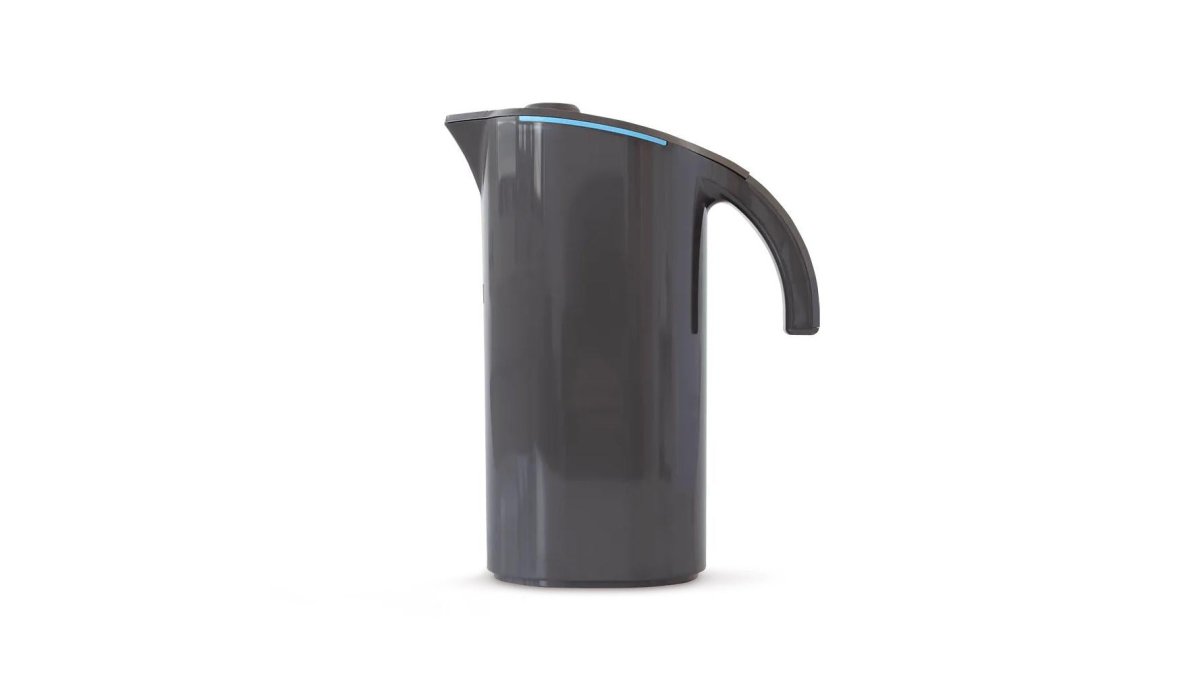
Peak Water Starter Pack: Best Adjustable Filter Jug for Home Baristas
Why 'adjustable' is the point
Most filters are a fixed recipe: they remove a set proportion of hardness and chlorine and that is that. Peak Water works differently. A dial on the cartridge controls how much water bypasses the ion-exchange resin, so you can blend filtered and unfiltered water to hit a target hardness rather than accepting whatever the cartridge happens to produce. The carbon stage removes chlorine and organics regardless of the dial setting.
What you get in the box
The starter pack includes the jug, one cartridge, and test strips. The jug holds 2.4 litres and filters 1.2 litres at a time, fits in a fridge door, and is made in the UK. Filters are recyclable through a pre-paid return service, and a portion of every sale supports clean water projects in coffee-growing communities, a genuine differentiator if sustainability is part of your buying decision, since most cartridge filters still go to landfill.
Jura CLARIS Mains Water Filtration →
Where it fits, and where it does not
Pros: genuinely adjustable hardness; includes test strips; recyclable filters and fridge-friendly design; supports clean water projects. Cons: manual refilling suits low-volume brewing better than a busy kitchen; not compatible with plumbed-in machines.
Sage ClaroSwiss Water Filter: Best Budget Filter for Sage Espresso Machines
If you own a Sage machine, this is the straightforward replacement. The ClaroSwiss filter fits a defined list of models including the Barista Express, Barista Pro, Bambino Plus, Dual Boiler and Oracle Touch.
Limescale Prevention for Espresso Machines: What Actually Works
Limescale prevention comes down to controlling the minerals that form deposits before they reach the boiler. In hard water areas, calcium carbonate precipitates out when water is heated, coating heating elements and narrowing pipework.
Test before you treat
Testing is the starting point, and it needs to be specific.
Match the filter to the reading
Once you know your numbers, the treatment choice follows:
- Soft water (under about 4° dH / 70 mg/L): scale risk is low. A carbon-only cartridge to remove chlorine and organics is often enough, and you can run longer between changes.
- Moderately hard (roughly 4-12° dH): ion exchange is the workhorse. It swaps calcium and magnesium ions for sodium or hydrogen ions, which do not precipitate as scale.
- Hard to very hard (above about 12° dH): ion exchange still works, but cartridge life collapses. Expect to replace filters several times more often than the box suggests, or consider blending filtered and unfiltered water to reduce the load.
What descaling can and cannot fix
Descaling remains necessary on machines without filtration, but it is a corrective measure rather than a preventive one. A descale dissolves carbonate scale from accessible surfaces, but it cannot restore a pitted heating element, a seized pump, or scale that has baked onto a boiler wall over years. Consistent filtration reduces how often descaling is needed and protects the components that descaling cannot fully restore.
The mineral-chemistry angle most guides miss
Preventing scale is only half the job. The minerals you leave in the water shape what ends up in the cup.
Frequently Asked Questions
What is the best water filter system for an espresso machine?
There is no single best option because it depends on your machine type and water hardness. For mains-fed Jura machines, the Jura CLARIS Mains Water Filtration Filter Cartridge at £175 offers professional-grade filtration and reduces limescale build-up. For tank-fed Jura machines, the CLARIS Pro Smart+ at £37.50 includes RFID technology and a stabilisation capsule. For home baristas using any machine, the Peak Water Starter Pack at £49 lets you adjust filtration settings based on your tested water hardness.
How does water hardness testing for coffee work?
Water hardness testing measures the concentration of calcium and magnesium ions in your water. The Peak Water Starter Pack includes two test strips that give you a reading within minutes. Compare your result against the recommended settings in the user guide to adjust the filter accordingly. Jura filter cartridges also provide guidance on usage, so knowing your water conditions helps you estimate cartridge lifespan.
How often should I replace the water filter in my espresso machine?
Replacement intervals depend on your water hardness and daily usage. A Jura CLARIS Pro Blue+ cartridge lasts up to 300 litres in soft water (1-10°dH) but only 80 litres in very hard water (26-30°dH). The Jura CLARIS Pro Smart Maxi extends this to 750 litres in soft water. If your machine supports RFID, it will notify you when replacement is due. Without RFID, track your litres used or replace every two to three months as a baseline.
Can I use a standard water filter jug for my espresso machine?
Standard filter jugs reduce chlorine and some impurities but do not give you control over mineral content, which directly affects extraction and taste. The Peak Water Starter Pack is different because it uses adjustable dual-ion resin settings, letting you tune the water to your coffee. For Jura and Sage machines, manufacturer-specific cartridges like the Sage ClaroSwiss at £14.95 or Jura CLARIS range are designed to fit the machine's water tank and filtration system precisely.
What is the difference between a water softener and a carbon filter for coffee?
A water softener uses ion exchange to remove calcium and magnesium ions, which are the minerals that cause limescale. A carbon filter removes chlorine, organic compounds and some heavy metals but does not reduce hardness. Most espresso filters combine both: the Jura CLARIS Pro Smart Maxi uses ion exchange and activated carbon together, removing chlorine and heavy metals while preserving the minerals needed for proper extraction. Using only a carbon filter in a hard water area will not prevent scale buildup.