

Best Dual Boiler Espresso Machine 2026: Top Picks Reviewed
Table of Contents
- Best Dual Boiler Espresso Machine 2026: Our Top Picks
- Sage Dual Boiler: Best for Consistent Extraction
- Sage Oracle Touch: Best for Automated Precision
- Sage Oracle Dual Boiler: Best for Smart Integration
- Graef Estessa: Best for Advanced Pressure Profiling
- Dual Boiler vs Heat Exchanger Espresso Machines: Which Is Right for You?
- What to Look for in a Dual Boiler Espresso Machine
- Espresso Machine Maintenance Tips for Dual Boiler Systems
Best Dual Boiler Espresso Machine 2026: Top Picks Reviewed
Last Updated: July 14, 2026
When selecting a best dual boiler espresso machine 2026, you're investing in equipment that separates casual coffee drinkers from those who demand café-quality results at home. Dual boiler systems allow simultaneous brewing and steaming without temperature compromise, a feature that transforms your entire espresso workflow.
The distinction between a dual boiler and other espresso systems comes down to thermal stability and workflow efficiency. Unlike heat exchanger machines that share a single boiler, dual boiler espresso machines maintain independent temperature control for brewing and steaming. This means you can pull shots and froth milk at the precise temperatures each requires, without waiting for the machine to recover between tasks.
Quick Comparison Table
| Machine | Key Strength | Best For | Starting Price |
|---|---|---|---|
| Sage Dual Boiler | Consistent extraction, PID control | Home baristas seeking reliability | £1,111 |
| Sage Oracle Touch | Automated precision, touchscreen | Those wanting convenience without sacrifice | £2,100 |
| Sage Oracle Dual Boiler | Smart integration, Wi-Fi connectivity | Tech-forward enthusiasts | £2,500 |
| Graef Estessa | Advanced pressure profiling | Experimenters and light-roast specialists | £1,665 |
Sage Dual Boiler: Best for Consistent Extraction
The Sage Dual Boiler delivers professional-level performance without overwhelming complexity. Its PID temperature control paired with a 58mm portafilter, the industry standard, opens access to a vast ecosystem of accessories. The actively heated group head maintains thermal stability shot after shot, improving your espresso consistency dramatically within the first week of use.
The dual stainless steel boilers work independently, so whilst you're pulling a shot from the brew boiler, the steam boiler reaches full pressure for milk work. The low-pressure pre-infusion function gradually builds pressure before extraction begins, helping prevent channelling, one of the most common causes of inconsistent shots.
The machine requires regular backflushing (daily, with water only) and monthly descaling. The Sage Dual Boiler Espresso Machine - 58mm Portafilter, PID, Stainless Steel Boilers represents genuine value for the performance delivered.
Sage Oracle Touch: Best for Automated Precision
The Sage Oracle Touch removes the guesswork through automation. The touchscreen interface controls every variable: pre-infusion duration, pressure profiling, water temperature, and shot timing. You input your target shot weight, and the machine delivers it consistently, pull after pull.
The auto-tamper function eliminates manual tamping inconsistencies, a leading cause of channelling and weak shots. Combined with the built-in grinder (45 different settings), you have a complete system that handles dial-in automatically. This machine suits busy professionals who want café-quality espresso without spending 20 minutes perfecting technique each morning.
The Sage Oracle Touch Espresso Machine - Touchscreen, Dual Boiler, Auto Tamper carries premium pricing but eliminates the frustration many home baristas experience during the learning phase.
Sage Oracle Dual Boiler: Best for Smart Integration
The Sage Oracle Dual Boiler integrates Wi-Fi connectivity alongside its dual boiler architecture. You can schedule pre-heating remotely, adjust temperatures via smartphone, and receive notifications when descaling is due. The integrated Baratza grinder offers 45 settings and communicates with the espresso machine to optimise grind consistency.
The auto dial-in feature removes the traditional "dialling in" process by adjusting pre-infusion, pressure profiling, and flow rate automatically. The pressure profiling capability lets you create custom pressure curves that match specific coffee profiles. According to specialty coffee research on extraction variables, pressure profiling can improve extraction yield by 2-4%, translating to noticeably cleaner, more balanced shots.
The Sage Oracle Dual Boiler Espresso Machine - Auto Dial-In, Baratza Grinder, 45 Settings, Wi-Fi appeals to enthusiasts who want modern control without the complexity of fully manual machines.
Graef Estessa: Best for Advanced Pressure Profiling
The Graef Estessa uses paddle-based flow control, allowing you to adjust pressure in real time. This demands more skill but rewards experimentation with unprecedented flexibility. You can start with low pressure for a gentle bloom, then gradually increase pressure as the shot progresses, giving you complete agency over extraction.
The Estessa's dual PID controllers manage brew and steam boiler temperatures independently. The E61 group head provides additional thermal mass that buffers temperature fluctuations. Combined with paddle control, you have a machine that responds to your technique.
The Graef Estessa Espresso Machine - Dual Pump, PID, Pressure Profiling suits those who view espresso-making as an active craft rather than a convenience appliance.
Dual Boiler vs Heat Exchanger Espresso Machines: Which Is Right for You?
Heat exchanger machines use a single large boiler at steam temperature. The brew group cools water to espresso temperature as it travels through the group. This works, but introduces temperature variability. The first shot after heating runs hotter than subsequent shots. You're constantly "surfing" temperature, adjusting timing to compensate.
Dual boiler machines eliminate this problem. The brew boiler maintains espresso temperature independently; the steam boiler handles milk work. Temperature remains stable across 50 consecutive shots with proper PID control. This consistency matters enormously for dialling in coffee.
The trade-off is size and cost. Dual boiler machines require more counter space and cost more to manufacture. For home users pulling 2-3 shots daily, this investment returns value through improved consistency and workflow speed. Heat exchangers do offer faster heat-up times (15-20 minutes versus 25-30 minutes), but most home baristas prioritise the thermal stability that dual boiler machines provide.
What to Look for in a Dual Boiler Espresso Machine
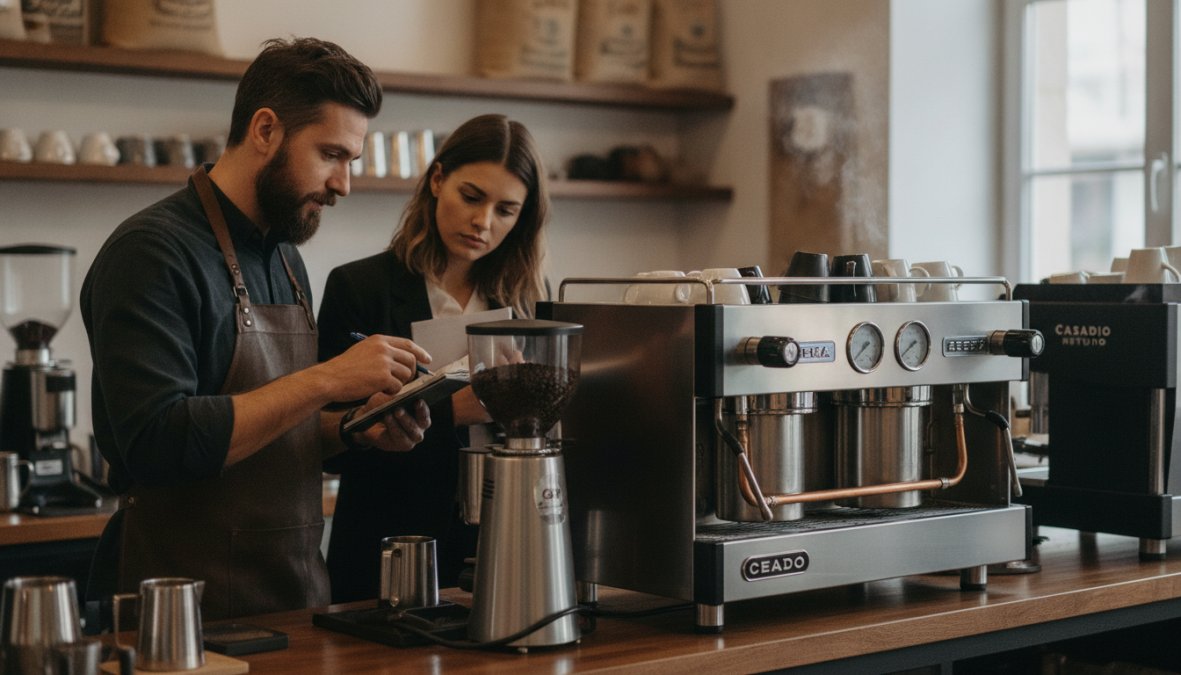
PID Temperature Control and Thermal Stability
PID (proportional-integral-derivative) controllers maintain boiler temperature within ±1°C, compared to mechanical thermostats that vary by 5-10°C. Look for machines with independent PID controllers for brew and steam boilers. A 5°C temperature swing changes flavour noticeably, shots become bitter when too hot, sour when too cool.
Immersion heaters (elements submerged in the boiler) distribute heat evenly but respond slowly. Flow heaters respond quickly but can create temperature gradients. Most dual boiler machines use immersion heaters for the brew boiler and flow heaters for the steam boiler, balancing response time with stability.
Portafilter Size and Group Head Design
The 58mm portafilter is the industry standard, ensuring abundant and affordable parts and accessories. The E61 group head, found on premium machines, includes a thermosyphon system that continuously circulates water through the group, maintaining consistent temperature and reducing temperature shock.
Active group head heating provides additional thermal mass that buffers temperature fluctuations and improves consistency.
Steam Wand Power and Microfoam Capability
The steam wand must deliver sufficient pressure to heat and froth milk quickly. Quality systems froth a pitcher of milk in 15-20 seconds; underpowered systems take 60+ seconds. Two-hole steam wands create two jets that spin the milk, generating microfoam efficiently. Single-hole wands require more technique and produce coarser bubbles.
Espresso Machine Maintenance Tips for Dual Boiler Systems
Dual boiler espresso machines are engineered for longevity, but only with proper maintenance. Neglect leads to scale buildup, reduced performance, and costly repairs.
Backflushing and Descaling Protocols
Backflushing forces water backwards through the group head, expelling coffee residue. This should happen daily, using water only. Insert the portafilter without a basket, activate the pump for 1-2 seconds, then release. Repeat 5-6 times.
Descaling removes mineral deposits from the boilers. Descale monthly using a commercial espresso machine descaler, running the solution through both brew and steam circuits, then flushing thoroughly with fresh water.
Water Chemistry and Long-Term Reliability
Water quality directly impacts machine longevity and espresso flavour. The ideal water for espresso contains 75-150ppm total dissolved solids with balanced calcium and magnesium. If your tap water exceeds 200ppm, consider using filtered water.
Research from Specialty Coffee Association water standards demonstrates that water chemistry affects extraction yield by up to 3%, translating directly to flavour quality. Using proper water prevents scale whilst optimising extraction.
Selecting the best dual boiler espresso machine 2026 requires balancing automation against control, budget against features, and convenience against the satisfaction of mastering technique. Whether you choose the straightforward reliability of the Sage Dual Boiler or the advanced profiling capabilities of the Graef Estessa depends entirely on your priorities and experience level.
At Coffee Craft Studio, we've curated a selection of premium dual boiler machines designed for those who demand café-quality results. Our expertly chosen range includes the Sage Oracle Dual Boiler with Wi-Fi integration and the Graef Estessa with advanced pressure profiling, equipment built for precision and performance. Whether you're upgrading from a single boiler machine or investing in your first serious espresso setup, our specialist team can guide you toward equipment that matches your specific needs.
Frequently Asked Questions
Is a dual boiler espresso machine worth it for home use?
Yes, a dual boiler espresso machine is worth the investment for serious home baristas. The dual boiler system allows simultaneous brewing and steaming, eliminating wait times between shots and milk drinks. This setup delivers barista-quality extraction with precise PID temperature control and consistent shot quality, making it ideal for those who brew multiple cups daily or entertain guests regularly.
What is the main advantage of a dual boiler espresso machine?
The primary advantage is independent temperature management for brewing and steaming. Each boiler maintains its optimal temperature, enabling you to pull a shot while simultaneously steaming milk without temperature fluctuations. This results in superior crema consistency, better microfoam texture, and faster workflow, essential for café-style home brewing and achieving professional-level espresso shots.
How does a dual boiler machine differ from a heat exchanger system?
Dual boiler machines feature two separate boilers, one for brewing and one for steaming, providing independent temperature control and simultaneous operation. Heat exchanger machines use a single boiler with a tube running through it; whilst more compact, they require temperature surfing and cannot brew and steam simultaneously. Dual boiler systems offer superior thermal stability and faster heat-up times, though they demand more counter space and maintenance attention.
What espresso machine maintenance tips should I follow for a dual boiler system?
Regular backflushing (daily) removes coffee residue from the group head, whilst descaling (monthly) prevents mineral buildup in both boilers. Use filtered water to reduce hardness and extend component life. Check the steam wand after each use, and inspect seals and gaskets quarterly. Professional servicing annually ensures optimal PID performance and prevents costly repairs. Proper maintenance extends your machine's lifespan significantly.
How long do dual boiler espresso machines typically last?
Well-maintained dual boiler machines can last 10-15 years or longer. Build quality varies significantly, Italian-engineered models from brands like Lelit and Profitec tend to outlast entry-level alternatives. Regular descaling, proper water chemistry management, and timely component replacement (seals, gaskets, heating elements) are critical. Premium machines with robust construction often justify higher initial costs through extended reliability and lower long-term maintenance expenses.
This article was written using GrandRanker