

Best Coffee Machines for Home in 2026: Expert Picks
Table of Contents
- Coffee Machines for Home: A Quick Comparison of Our Top Picks
- Sage Barista Express Impress: The All-Rounder for Hands-On Brewing
- Sage Oracle Dual Boiler: Full Automation with a Barista's Heart
- La Marzocco Linea Mini: Commercial Heritage for the Home
- Manual Espresso Machine vs Automatic: Which Suits Your Routine?
- Espresso Machine Cleaning and Maintenance: Protecting Your Investment
- How to Choose the Right Coffee Machine for Your Kitchen
- Conclusion: Find Your Perfect Brew at Coffee Craft Studio
- Frequently Asked Questions
Last Updated: September 7, 2026
Coffee Machines for Home: A Quick Comparison of Our Top Picks
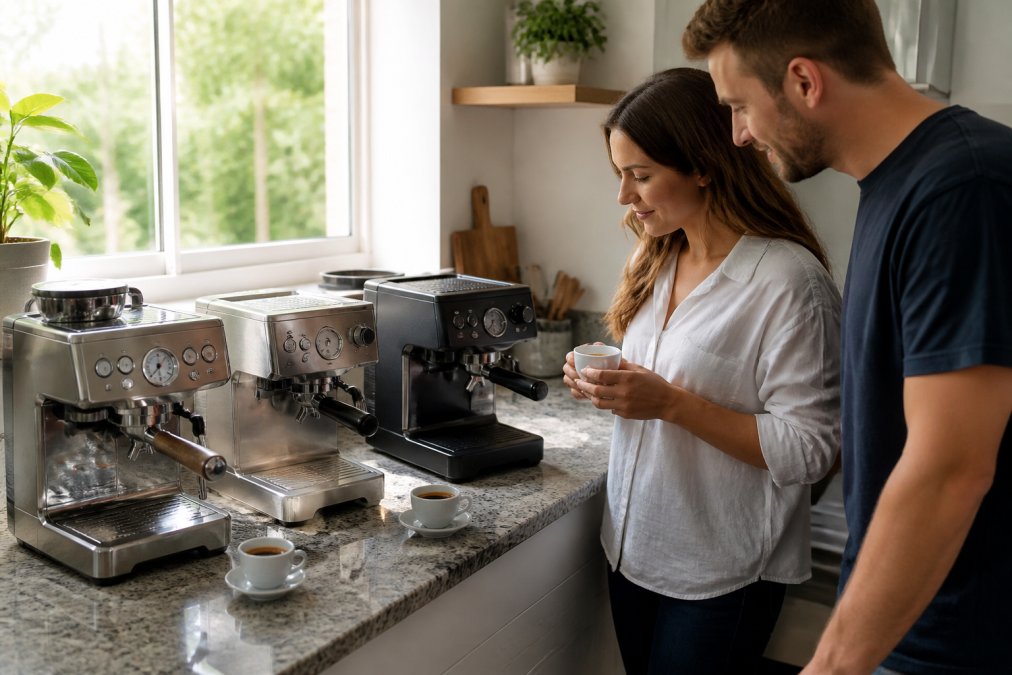
Choosing the right coffee machines for home use has never been more demanding, with options ranging from compact entry-level models to commercial-grade behemoths. The market has matured to the point where the real question isn't "can I make good espresso at home" but "which machine matches my routine, skill level, and budget without compromise." At Coffee Craft Studio, we've curated a range that spans from the accessible Sage Bambino Plus at £329.95 to the La Marzocco GS3 at £7,888.00, and we understand that the gap between these figures represents vastly different brewing philosophies. Below, we'll break down our top picks, what genuinely separates them, and how to protect your investment once it's on your counter.
The most important distinction to grasp early is that a higher price tag doesn't automatically mean a better cup of coffee. What it usually buys you is consistency, thermal stability, and workflow efficiency. For someone pulling two shots a day, a manual machine with a learning curve might be a joy. For someone hosting dinner parties or running a home office that runs on caffeine, automation becomes the priority.
| Machine |
|---|
| Price |
| Boiler Type |
| Grinder |
| Best For |
| --- |
| Sage Barista Express Impress |
| £729.95 |
| Thermocoil |
| Integrated 25 settings |
| Hands-on brewers wanting consistency |
| Sage Oracle Dual Boiler |
| £2,499.95 |
| Dual Stainless Steel |
| Integrated Baratza 45 settings |
| Automation with barista control |
| La Marzocco Linea Mini |
| £4,786.00 |
| Dual Boiler |
| External (not included) |
| Enthusiasts wanting commercial heritage |
| Sage Bambino Plus |
| £399.95 |
| ThermoJet |
| External (not included) |
| Compact kitchens, fast heat-up |
Sage Barista Express Impress: The All-Rounder for Hands-On Brewing
The Sage Barista Express Impress sits at £729.95 and represents the sweet spot for those who want to be involved in the brewing process without fighting the equipment. Its Impress Puck System is the standout feature here, using intelligent dosing that monitors your previous extractions and auto-adjusts the next dose. The assisted tamping applies a consistent 10kg pressure before finishing with a 7-degree barista twist, which removes the most common variable that ruins home espresso: uneven tamping (peer-reviewed research).


What makes this one of the most practical coffee machines for home use is the integrated conical burr grinder with 25 settings. You're not just buying a brewer; you're buying a complete bean-to-espresso workflow that operates in under a minute. The 54mm portafilter with an 18g dose, combined with low-pressure pre-infusion and a 9 bar extraction, delivers a shot with proper crema and body. The PID-controlled Thermocoil heating system maintains water at approximately 93°C, which is the temperature sweet spot for most medium roasts (sca.coffee).
The limitation is the single Thermocoil heating system. You can't brew and steam simultaneously, which slows down milk-based drinks if you're making more than two at a time. For a dedicated home barista crafting flat whites for themselves and a partner, this is rarely a problem. For weekend brunch hosting, you'll want to look at the dual boiler options.
Sage Oracle Dual Boiler: Full Automation with a Barista's Heart
For those who want café-quality results with minimal fuss, the Sage Oracle Dual Boiler at £2,499.95 is the most technologically advanced machine in Sage's home lineup. The headline feature is the Auto Dial-In system, which monitors each extraction and automatically adjusts the grind settings to improve consistency over time. This is intelligent feedback that effectively removes the trial-and-error phase of dialling in a new bag of beans.

The dual stainless steel boiler system is the defining upgrade over the Barista Express Impress. You get simultaneous espresso extraction and milk steaming without any temperature fluctuation, thanks to PID control that allows 1-degree adjustments. The integrated Baratza European precision burr grinder offers 45 grind settings and feeds directly into the Auto Puck System, which grinds, doses, and tamps automatically. The 58mm commercial-style portafilter supports a 22g dose, which is what you'd find in a professional café setting.
The Auto MilQ milk texturing system deserves special attention for UK coffee drinkers who favour oat or soy milk. It has dedicated presets for dairy, oat, soy, and almond milk, adjusting temperature and air injection automatically. The 5.7-inch touchscreen guides you through 16 pre-set drink recipes, and you can save up to eight personalised profiles. Wi-Fi connectivity via the Sage+ app lets you pre-heat the machine remotely, so it's ready when you walk into the kitchen.
La Marzocco Linea Mini: Commercial Heritage for the Home
The La Marzocco Linea Mini represents a different philosophy entirely. At £4,786.00, this is not an appliance; it's an investment in Italian craftsmanship and commercial pedigree. The Linea Mini is inspired by the Linea Classic, the machine that has been the backbone of specialty coffee shops worldwide for decades. What you're paying for here is the saturated group head technology and the 3-litre steam boiler, components that deliver the thermal stability required for serious shot consistency.
This machine demands more from its owner. There is no integrated grinder, so you'll need to invest separately in a quality grinder, which adds considerably to the total cost. The semi-automatic operation means you control the extraction from start to finish. However, the Brew-by-Weight compatibility and adjustable pump pressure give you the tools to achieve exceptional precision once you've mastered the basics.
What most reviews miss is that the Linea Mini is future-proof. It's built using commercial-grade components designed for years of heavy use. The two-valve pre-infusion system and self-cleaning flow restrictor mean less maintenance over time. For the home barista who sees espresso as a craft and wants equipment that will never become the limiting factor, this is the definitive choice.
Manual Espresso Machine vs Automatic: Which Suits Your Routine?
The decision between a manual espresso machine vs automatic comes down to a single question: do you view the brewing process as a ritual to enjoy or a barrier to your coffee? Manual machines like the Sage Barista Express Impress give you control over every variable, from grind size to tamping pressure to extraction time. This control is precisely what allows you to dial in different beans and roast profiles to their full potential. The trade-off is a learning curve and inconsistency until you develop the muscle memory.
Automatic machines, exemplified by the Oracle Dual Boiler, use sensors and software to remove these variables. The Auto Dial-In system and Auto Puck System handle the grinding, dosing, and tamping, while the touchscreen guides you through drink preparation. For someone making 2-3 espressos a day while working from home, the automation ensures every shot is as good as the last, without requiring barista training.
The middle ground, and often the smartest choice, is a machine like the Oracle Dual Boiler that offers both Auto and Manual modes. You can rely on automation for your morning rush, then switch to manual control on weekends when you have time to experiment. This flexibility is why we recommend it for most serious home users. Consider how much time you're willing to dedicate to learning and practice. If the answer is "very little," lean toward automation. If you're excited by the craft, manual control will reward your patience.
Espresso Machine Cleaning and Maintenance: Protecting Your Investment
Espresso machine cleaning and maintenance is the single most overlooked aspect of home coffee ownership, and it's the difference between a machine that lasts five years and one that lasts fifteen. The two critical routines are backflushing and descaling. Backflushing cleans the group head and internal plumbing of coffee oil residue, which goes rancid and imparts bitter flavours to your shots. Descaling removes limescale build-up, which is particularly important in hard water areas of the UK.
For machines with a three-way solenoid valve, like the Sage Dual Boiler and Oracle, you should backflush with a cleaning tablet every 50-100 shots or at least monthly with regular use. The process takes about five minutes: insert the blind filter basket, add the tablet, and run the cleaning cycle. For machines without this feature, a weekly group head rinse and regular portafilter cleaning is essential. Your machine's manual will specify the exact cycle, but the principle is universal: coffee oil is sticky and will degrade your shot quality if left to accumulate.
Descaling frequency depends entirely on your water hardness. Sage recommends descaling every 3-6 months for typical UK water, but this varies significantly between soft water regions like Scotland and hard water areas like London (gov.uk). Use the descaling powder provided with your machine, never generic descalers that can damage the internal components. A machine that's properly maintained maintains its resale value and, more importantly, its shot consistency.
How to Choose the Right Coffee Machine for Your Kitchen
The right coffee machines for home use must balance four factors: your daily consumption, your counter space, your willingness to learn, and your budget. Start with consumption. If you make one or two espressos a day, a single boiler machine like the Sage Bambino Plus at £399.95, or even the Bambino at £329.95, is more than sufficient. These machines use Sage's ThermoJet heating system, reaching brewing temperature in three seconds, which eliminates the waiting game that plagues traditional single boilers.
Counter space and kitchen dimensions matter more than most buyers anticipate. The La Marzocco GS3 measures 400 x 530 x 355mm and weighs 34.5kg, requiring dedicated, reinforced counter space. The Sage Bambino, by contrast, is a compact 195 x 320 x 310mm and weighs just 4.95kg, easily tucked under a cupboard. Measure your space before you fall in love with a machine, and remember you'll need clearance above for filling the water tank and access to the bean hopper.
Budget should be considered as total cost of ownership, not just the purchase price. A machine with an integrated grinder, like the Barista Express Impress, saves you the £150-£300 you'd spend on a standalone grinder. Machines without integrated grinding require that additional investment. You should also factor in maintenance costs: water filters, cleaning tablets, and descaling powder add up over a year of daily use. A realistic annual maintenance budget for a dual boiler machine is £50-£80.
| Your Situation |
|---|
| Recommended Machine |
| Price |
| Key Reason |
| --- |
| First machine, limited space |
| Sage Bambino Plus |
| £399.95 |
| Compact, 3-second heat-up |
| Learning espresso craft |
| Sage Barista Express Impress |
| £729.95 |
| Integrated grinder, assisted tamping |
| Daily milk drinks, wants convenience |
| Sage Oracle Dual Boiler |
| £2,499.95 |
| Auto dial-in, dual boiler |
| Serious enthusiast, no compromise |
| La Marzocco Linea Mini |
| £4,786.00 |
| Commercial heritage, thermal stability |
Conclusion: Find Your Perfect Brew at Coffee Craft Studio
Selecting from the range of coffee machines for home use is a personal decision that hinges on your routine, your space, and your commitment to the craft. Whether you're drawn to the hands-on control of the Sage Barista Express Impress, the intelligent automation of the Oracle Dual Boiler, or the uncompromising heritage of the La Marzocco Linea Mini, the right machine is the one you'll use consistently and maintain properly. The team at Coffee Craft Studio understands that this is an investment in your daily ritual, which is why we offer expert consultation to help match you with the equipment that fits your lifestyle. Explore our curated selection of premium espresso machines and grinders and get started with Coffee Craft Studio to bring café-quality precision to your kitchen counter.
Frequently Asked Questions
Which is the best coffee machine for home use?
The best coffee machines for home use depend on your skill level and how much control you want. For a balance of automation and hands-on brewing, the Sage Barista Touch Impress offers guided assistance. If you want professional control without the learning curve, the Sage Dual Boiler is a strong choice. For those who value commercial heritage and precision above all, the La Marzocco Linea Mini is the gold standard. Consider your daily routine, budget, and whether you prioritise convenience or manual control.
What is the difference between a manual espresso machine and an automatic one?
A manual espresso machine, like the Sage Barista Express, requires you to control grinding, dosing, tamping, and extraction timing to achieve the perfect shot. An automatic machine, such as the Sage Oracle Dual Boiler, automates these steps with features like intelligent dosing and assisted tamping for consistency. Manual machines offer greater control for enthusiasts, while automatic models reduce guesswork and are ideal for those who want café-quality results with minimal effort.
How often should I descale my home espresso machine?
Descaling frequency depends on your water hardness and how often you brew. As a general rule, descale your espresso machine every 2 to 3 months. If you live in a hard water area, you may need to do it monthly. Always use a descaling solution recommended by the manufacturer, like the tablets included with Sage machines, and follow the specific instructions in your machine's manual to avoid damaging the internal boiler system.
Are professional-grade coffee machines worth the investment for home use?
For coffee enthusiasts who drink multiple espressos daily, a professional-grade machine is worth the investment. Machines like the La Marzocco GS3 offer commercial-grade thermal stability and build quality that lasts for decades, resulting in a lower long-term cost of ownership. They also provide the precision needed to explore different coffee beans and roast profiles. If you only make one coffee occasionally, a more compact model like the Sage Bambino Plus may be a better fit.