

Benefits of Using a Precision Espresso Basket
Table of Contents
- What a Precision Espresso Basket Actually Changes
- Precision Espresso Basket vs Standard Basket: A Fair Comparison
- The Main Benefits of Using a Precision Espresso Basket
- Espresso Basket Types: Which One Suits Your Setup?
- How to Choose an Espresso Basket That Fits
- Dialing In After the Switch: A Practical Workflow
- Espresso Basket Cleaning and Long-Term Performance
- Frequently Asked Questions
Last Updated: October 18, 2026
What a Precision Espresso Basket Actually Changes
A precision espresso basket is a filter basket machined to much tighter tolerances than the standard basket that ships with most machines. The benefits of using a precision espresso basket come down to one thing: water passes through the coffee puck more evenly, so extraction becomes more predictable.
The basket is the last thing water touches before it hits your cup. Every hole in that disc shapes how water meets coffee grounds.
Hole size, spacing and manufacturing tolerances
Standard baskets are stamped from sheet metal. That process is fast and cheap, but it leaves variation: holes that are slightly different sizes, spacing that drifts across the disc, and a surface that is not perfectly flat.
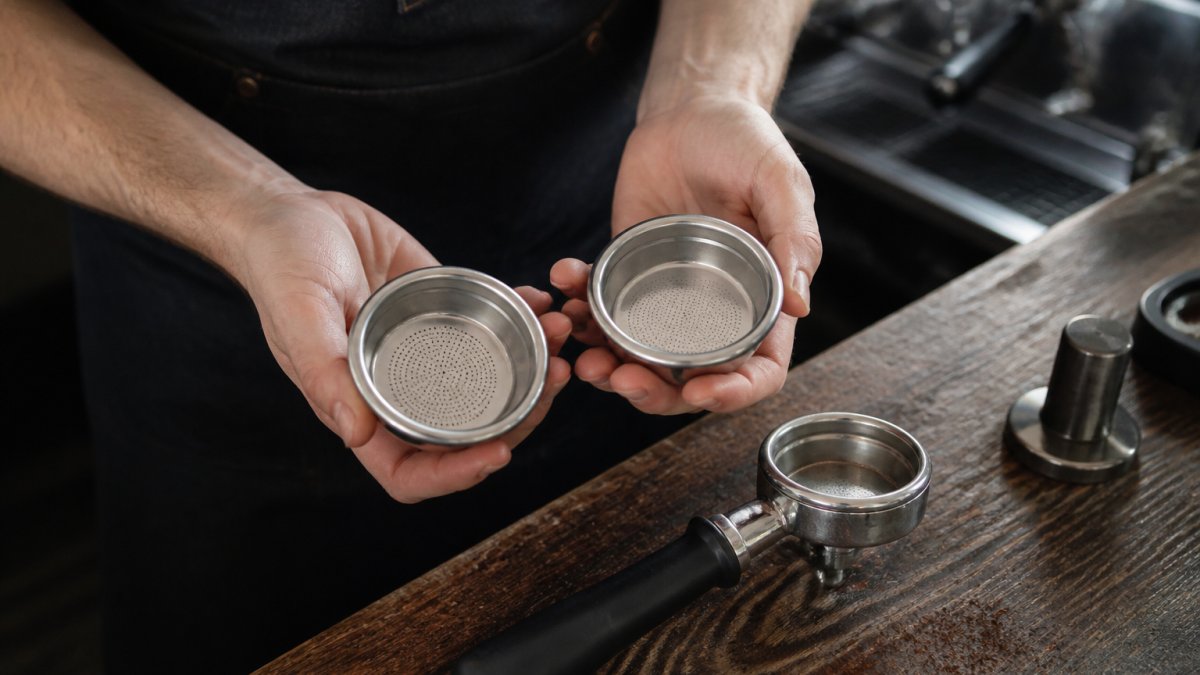
Precision baskets are machined instead. The result is a set of basket holes with far tighter hole diameter, hole spacing and hole-to-hole variability. Fewer blocked holes, fewer oversized ones, and a more consistent perforation pattern across the base.
That consistency is the whole point. It is not about making espresso taste different by magic. It is about removing one source of randomness from your workflow.
Precision Espresso Basket vs Standard Basket: A Fair Comparison
The honest comparison is about repeatability, not miracles. A precision basket gives you a flatter, more uniform base and a cleaner path for water. A standard basket can still make excellent espresso, but it gives you less control over the variables.
Here is how the two compare in practice:
| Factor | Standard Basket | Precision Basket |
|---|---|---|
| Manufacturing | Stamped sheet metal | Machined to tight tolerances |
| Hole consistency | Noticeable variation | Tight hole-to-hole variability |
| Surface finish | Often slightly uneven | Flatter, cleaner base |
| Extraction evenness | Less predictable | More repeatable shot to shot |
| Best for | Casual brewing, forgiving setups | Dialing in, consistency chasers |
What most guides miss is that a precision basket will expose a weak grinder. If your grind consistency is poor, the basket will show it rather than hide it.
For background on how basket design affects extraction, the Specialty Coffee Association's research on espresso extraction is a useful starting point.
The Main Benefits of Using a Precision Espresso Basket
The benefits of using a precision espresso basket are practical and measurable in your cup, not abstract. You get more even extraction, less channeling, and shots you can repeat tomorrow. Those three things change how you dial in and how confident you feel behind the machine.
More even extraction and less channeling
Channeling happens when water finds the path of least resistance through the puck. It rushes through one spot, over-extracts there, and under-extracts everywhere else. A basket with consistent holes and a flat base gives water a more uniform route. Pair that with good puck preparation, even distribution and a level tamp, and channeling becomes less frequent.
The mechanism is straightforward: a stamped basket can have holes that vary slightly in diameter and spacing, so flow resistance across the puck is uneven before you even pull the shot. A machined basket reduces that variation, so the puck resists flow more evenly. Water flow and flow resistance behave more predictably, which means your shot time and yield land closer to target.
Clearer flavour, better body and repeatable shots
Even extraction changes what lands in the cup. You tend to get clearer flavour separation, a cleaner finish, and body that feels intentional rather than muddy. Repeatability is the bigger win. When the basket is not adding variation, a good shot is easier to reproduce. You adjust grind size, hit your brew ratio, and the next shot behaves the same way.
A fair test: same coffee, same recipe, two baskets
To separate basket effects from other variables, run a controlled comparison. Use the same coffee, grinder, dose, brew ratio, water temperature and puck preparation for both baskets. Pull three shots in each and record shot time, yield and tasting notes. Most practitioners find the precision basket produces a tighter spread of shot times and a more consistent flavour profile, while the standard basket shows more shot-to-shot variation. If your grinder is inconsistent, the precision basket may expose that rather than hide it, which is useful information but not an automatic improvement.
Espresso Basket Types: Which One Suits Your Setup?
Espresso basket types split into a few practical categories. Knowing which one you have matters more than chasing the newest design.
- Standard basket: comes with the machine, stamped, fine for learning.
- Precision basket: machined, tighter tolerances, best for consistency.
- High-extraction basket: designed to push extraction further, needs a capable grinder.
- Single and double baskets: match dose capacity to your routine.
- Competition-style baskets: built for repeatable results under pressure.
The right choice depends on your grinder, your machine, and how seriously you chase consistency.
How to Choose an Espresso Basket That Fits
Choosing an espresso basket starts with fit, then moves to dose. Get the compatibility right before you think about hole patterns.
- Check basket diameter. Most machines use a 58mm portafilter, but confirm yours.
- Check basket depth. Deeper baskets hold more dose; shallow ones suit smaller shots.
- Match dose capacity. Pick a basket that fits the dose you actually brew.
- Confirm machine fit. Some baskets need a specific ridge or rim profile.
- Check grinder capability. A precision basket rewards a consistent grind.
Basket compatibility is where most buyers trip up. Measure your current basket and compare it to the spec sheet before ordering.
If you are unsure, our team at Coffee Craft Studio can help you match a basket to your machine and grinder.
Dialing In After the Switch: A Practical Workflow
Dialing in after a basket change is a short, structured process. Expect to adjust grind size, because a precision basket usually changes flow resistance. The goal is not one good shot; it is a repeatable recipe you can return to tomorrow.
Step-by-step method
- Lock your baseline. Keep the dose and brew ratio you used with your previous basket. Record them.
- Pull a reference shot. Note shot time, yield and taste. If it runs fast, go finer on the grind; if it runs slow, go coarser. Adjust in small steps.
- Change one variable at a time. Do not change dose, grind and ratio together. You lose the thread and cannot tell what worked.
- Taste after each change. Judge balance, clarity and finish, not just numbers.
- Confirm repeatability. Pull three shots at your new setting before judging. One good shot can be luck; three in a row is repeatability.
What to record and why
Keep a simple log: dose, grind setting, shot time, yield and tasting notes. Shot time and yield are the most useful measures because they show whether flow is consistent. If shot times vary widely at the same setting, the basket may be exposing grinder inconsistency or puck preparation issues rather than solving them.
Realistic expectations and trade-offs
A precision basket rewards a capable grinder and good puck preparation. If your grinder produces inconsistent particles or your distribution is poor, the basket may show more channeling, not less. That is not a reason to avoid upgrading, but it is a reason to fix the weak link first. A common pattern is that the basket improves repeatability only after grind quality and puck preparation are under control.
Espresso Basket Cleaning and Long-Term Performance
Espresso basket cleaning protects the consistency you paid for. Coffee oils and fine particles clog basket holes over time, and blocked holes undo the whole benefit of a precision basket.
- Rinse the basket after every session.
- Backflush as your machine manufacturer advises.
- Soak the basket periodically in a suitable cleaner.
- Check for blocked holes by holding it up to the light.
- Replace the basket if the holes look worn or damaged.
Stainless steel holds up well, but it is not indestructible. Gentle, regular cleaning keeps hole diameter and flow consistent for years.
For guidance on cleaning products and methods, the UK Coffee Association's resources on espresso equipment care is worth a read.
Frequently Asked Questions
What is a precision espresso basket?
A precision espresso basket is a filter basket machined to much tighter tolerances than the one shipped with most machines. The holes are punched to a consistent diameter and spacing, the walls are thinner and more uniform, and the base is flatter. The result is water passing through the puck more evenly, which gives you a more consistent extraction shot to shot. It is a drop-in upgrade for most 58mm portafilters and costs far less than a new machine.
Do precision espresso baskets improve espresso flavour?
They can, but the improvement comes from consistency rather than magic. With more even water flow and less channeling, you taste more of what the coffee actually offers: clearer acidity, defined sweetness and a cleaner finish. The effect is most obvious with light roasts and single-origin beans, where uneven extraction is easy to spot. If your grind, dose and puck preparation are inconsistent, a precision espresso basket will expose that rather than fix it, so treat it as one part of a wider workflow.
Do I need to change my grind when using a precision basket?
Usually yes. Precision baskets have more open area and less flow resistance than standard baskets, so water passes through faster. Most people need to grind finer to bring shot time back into range, often by a click or two on a stepped grinder. Change one variable at a time: keep dose fixed, adjust grind until you hit a sensible shot time, then fine-tune by taste. Expect two or three shots before the setup settles.
How should I clean an espresso basket?
Rinse the basket with hot water after every session and wipe it dry to stop oils building up. Once a week, soak it in a coffee-specific cleaning powder dissolved in hot water, then rinse thoroughly. Check the holes by holding the basket up to a light; if any look blocked, soak longer and rinse from the underside. Avoid abrasive scourers, which scratch the surface and make future buildup worse. A clean basket keeps flow even and protects the flavour gains you paid for.
The challenge with any espresso upgrade is knowing which change actually improves your cup. A precision espresso basket is one of the few upgrades that pays off in repeatability, and it pairs naturally with the machines and grinders we curate at Coffee Craft Studio. Our range is built for precision and performance, from home setups to commercial operations, with the accessories and infrastructure to match. Get started with Coffee Craft Studio and pull shots you can trust, cup after cup.